



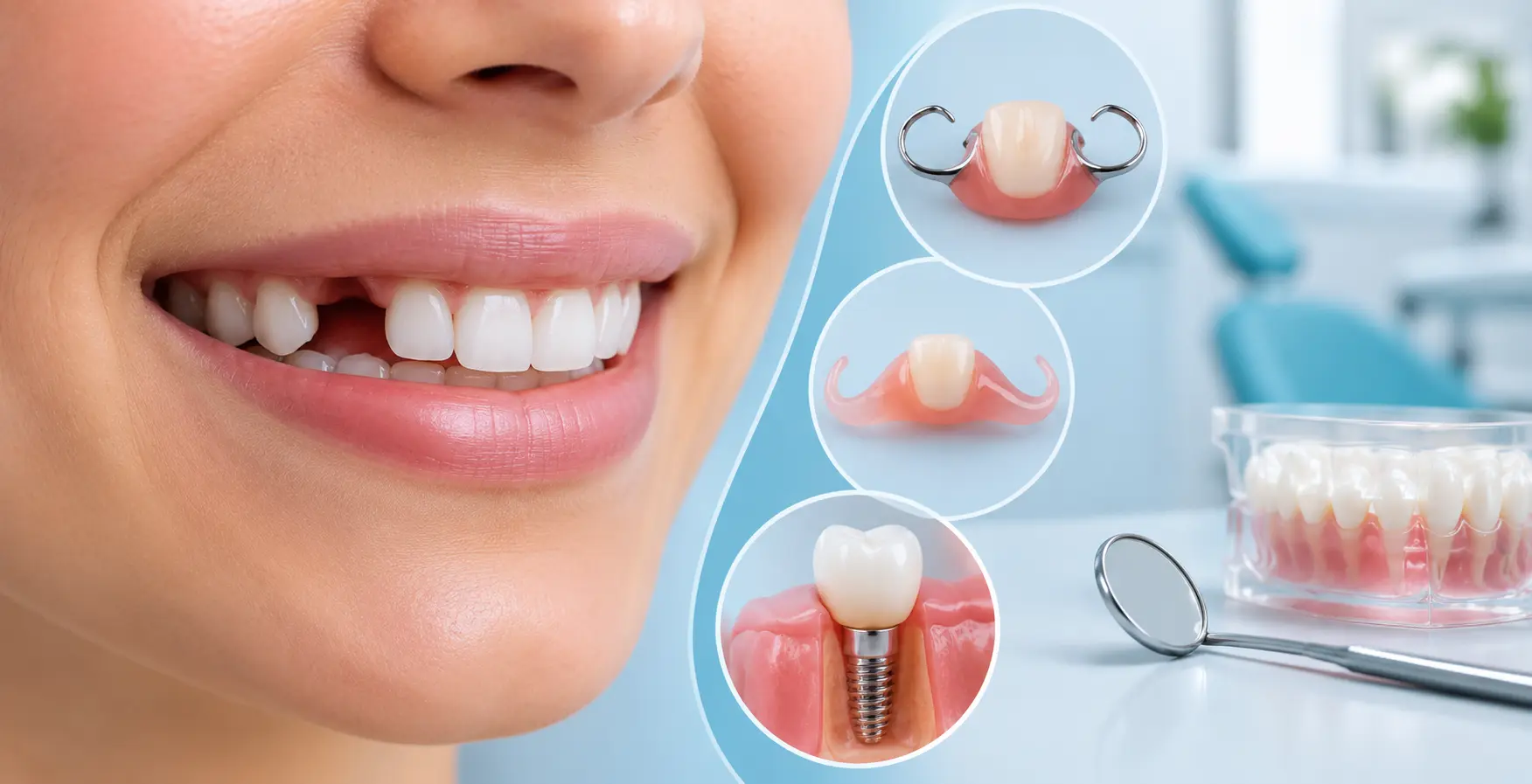
If you are missing a single tooth, a one tooth denture is a removable false tooth held in place by a small plastic or metal base that clips around, or rests against, your neighbouring teeth. It is the quickest and least invasive way to fill the gap, and it is often the right short term or budget friendly answer. It is not always the best long term one.
That is the honest version, and it is the reason we wrote this guide. At Aqua Dental Clinic in Hatch End, Harrow, we see patients every week who have lost one tooth and have been told three different things by three different people. Below we explain the types of single tooth denture, how they stay put, where they fall short, and how they compare with a bridge or an implant, so you can walk into your consultation knowing what to ask.
Key takeaways
- A one tooth denture is removable, needs no surgery, and can usually be made within a few weeks of the impression.
- Acrylic, flexible and cobalt chrome are the three common types, and each suits a different mouth.
- A denture sits on the gum and relies on your other teeth, so it will always feel more noticeable than a fixed option.
- If you want something that stays in your mouth, a bridge or an implant is worth discussing, and we cover both below.
- A short assessment is the only reliable way to know which option your gums, bite and remaining teeth can support.
What Is a One Tooth Denture?
A one tooth denture, sometimes called a single tooth denture or a partial denture for one missing tooth, is a removable appliance with one artificial tooth attached to a gum coloured base. The base is shaped to your mouth from an impression, and small clasps or a thin framework grip the teeth either side of the gap.
According to the NHS, partial dentures are made from acrylic or from a mix of acrylic and metal, and most people need a little time to get used to wearing one. That matches what we see. The first week is the awkward one. After that, speaking and eating usually settle down.
The three types you will be offered
Acrylic. This is the standard option and usually the most affordable. The tooth and base are moulded from hard plastic. It is easy to adjust or repair, which matters if your mouth changes. The trade off is bulk. To stay strong, acrylic has to be a little thicker, and some people find it more noticeable on the roof of the mouth or behind the lower teeth.
Flexible. Made from a thin thermoplastic material, a flexible denture has gum coloured arms rather than metal clasps, so nothing silver shows when you smile. That is why people with a missing front tooth often ask for it. It is lighter and can feel more forgiving. It is also harder to reline or repair, and in some mouths it flexes in a way that lets food collect underneath.
Cobalt chrome. Here the base is a thin metal framework with the false tooth attached. Metal can be made much slimmer than plastic, so it often feels the least bulky once it is in, and it is the strongest of the three. The clasps can occasionally be visible, depending on where the gap is.
None of these is better in every case. The right one depends on where the gap is, how your bite closes, and the health of the teeth that will carry the clasps.
A temporary denture after an extraction
If the tooth is being taken out, you do not have to leave the dentist with a gap. An immediate or temporary denture can be made in advance and fitted the same day as the extraction. It protects the area and keeps your smile intact while the gum heals. Gums change shape in the first few months, so a temporary denture usually needs adjusting, and many patients move on to a permanent solution once things settle. If you are being advised to have a tooth removed, ask about this before the appointment, not after.
How Does a One Tooth Denture Stay in Place?
A one tooth denture stays in place through a mix of clasps, suction and the shape of your gums. Clasps wrap around the neighbouring teeth, the base sits snugly against the gum, and a thin film of saliva helps it hold. There is no screw, no cement and no bone involved.
Because only one tooth is being replaced, there is much less surface area than with a full denture. That is the part people do not expect. A bigger denture spreads the load and grips well. A small one has to do more with less, so a precise fit matters more, not less.
It also means the denture leans on the teeth beside the gap. Those teeth carry the clasps every day, so they need to be healthy and stable. If they are loose, heavily filled or affected by gum disease, a denture can put extra strain on them. We check this at the assessment, and it is one of the main reasons we sometimes steer patients towards a different option.
Front tooth or back tooth: does it change the answer?
Yes, quite a lot.
For a front tooth, appearance comes first. Patients usually want a flexible denture so no metal shows, and the colour and shape of the tooth are matched carefully to the ones beside it. Biting into an apple with a front denture is another story, and most people learn to cut food or bite with the side teeth.
For a back tooth, comfort and strength matter more than looks. A molar takes heavy chewing force, so a cobalt chrome framework often copes better than acrylic. A gap right at the back is also the hardest place for a denture to stay still, because there is no tooth behind it to help the clasps hold. In that case we are more likely to talk through alternatives.
If you would like to see every type of denture we make, from a single tooth up to a full set, our dentures in Harrow service covers the full range.
One Tooth Denture vs Bridge vs Implant
There are three realistic ways to replace one missing tooth: a removable denture, a fixed bridge, or a dental implant. Here is how they sit side by side.
| One tooth denture | Dental bridge | Dental implant | |
|---|---|---|---|
| Fixed or removable | Removable | Fixed | Fixed |
| Surgery needed | No | No | Yes, a minor procedure |
| Neighbouring teeth | Clasps rest on them | Reshaped to hold crowns | Left untouched |
| Time to complete | A few weeks | A few weeks | Several months, healing included |
| Feels like a natural tooth | Least | Close | Closest |
| Cleaning | Take out and clean daily | Clean under the bridge | Brush and floss like a tooth |
| Typical upfront outlay | Lowest | Middle | Highest |
| Best suited to | Short term fix, budget, or gums not ready for surgery | Healthy teeth either side that already need crowns | Healthy gum and enough bone, and a long term view |
The upfront outlay row is a general pattern, not a quote. Your own price depends on the materials, your mouth and the number of visits, which we go through at the consultation.
The downsides, plainly
A denture is a good tool with real limits, and you should hear them before you commit.
It can move when you talk, laugh or eat sticky food. It can rub and cause sore spots, especially in the early weeks. It has to come out for cleaning, and some people dislike taking it out at night. Food can collect around the clasps. The bone under the gap also slowly shrinks when there is no tooth root to stimulate it, which a denture does not prevent, while an implant does. If you are weighing up whether to wait, read what happens if you delay replacing a missing tooth.
A bridge solves the movement problem but asks for healthy neighbouring teeth to be filed down to hold the crowns. That is a one way decision. An implant avoids both issues, though it needs enough bone and a healthy gum, plus patience while it heals. We compare the two in more depth in dental implants vs dental bridges and which is the better long term investment.
When a one tooth denture is the right choice
We often recommend a denture when:
- you want the fastest, least invasive replacement and are comfortable with a removable appliance;
- you are waiting for an extraction site to heal before choosing something fixed;
- your medical history, or the state of your gums, makes surgery a poor idea right now;
- the neighbouring teeth are healthy and you would rather not reshape them for a bridge;
- you need a tooth replaced quickly for an occasion and want a sensible bridge between now and a longer term plan.
If none of that sounds like you, ask us about the fixed options. A denture is rarely the only answer, and we would rather tell you that than fit one you will not wear.
How Long Does a One Tooth Denture Last, and How Do You Look After It?
A well made one tooth denture typically lasts several years, but there is no single number. Your gums and jaw keep changing shape, so the fit loosens over time. Acrylic can wear or crack, and clasps can tire. Most patients need a reline, an adjustment, or a replacement at some point, and regular check ups let us catch that early.
Daily care is simple, and it makes a visible difference. Our five tips to take care of your dentures cover the detail, and if you are wondering about overnight, we have answered whether you can sleep with dentures in separately. The essentials:
- Rinse the denture after eating, then brush it gently with a soft brush and a non abrasive cleaner. Ordinary toothpaste can scratch acrylic.
- Brush your natural teeth, gums and tongue as usual, paying extra attention to the teeth that hold the clasps.
- Take the denture out at night if your dentist advises it, and keep it in water or a denture cleaning solution, never in hot water.
- Handle it over a folded towel or a basin of water, because a dropped denture breaks more easily than people expect.
- Book regular check ups so we can look at the denture and the teeth underneath it.
What affects the cost
The price of a one tooth denture varies, because two patients with the same gap can need very different things. The main factors are the type of material (acrylic, flexible or cobalt chrome), whether the denture is temporary or permanent, the position of the tooth, how many appointments are needed, and whether any other treatment, such as an extraction or a gum health check, comes first. We talk you through the cost after your assessment so you know where you stand. For a wider look at pricing, see how much dentures cost in the UK.
What to expect at your appointment
The first visit is mostly a conversation. We look at the gap, the teeth beside it and your gums, and may take X rays. We then talk through the options in this guide and what each would mean for you. If a denture is the right fit, we take an impression and agree the shade and shape of the tooth.
You usually return for a try in, where the denture is checked in your mouth before it is finished. The final fitting follows, and we adjust it until it feels right. A follow up visit a few weeks later is normal, because sore spots show up once you have worn it for a while.
Frequently Asked Questions
Can you get a denture for just one tooth?
Yes. A one tooth denture, also called a single tooth or partial denture, replaces a single missing tooth with a removable false tooth on a small base. It is a common option, especially as a short term fix or while a gum heals after an extraction.
Is a one tooth denture better than a bridge or an implant?
Not better, just different. A denture is the least invasive and quickest, but it is removable and feels less natural. A bridge and an implant are fixed and feel closer to a real tooth, but they involve reshaping teeth or surgery. The right choice depends on your gums, bone, neighbouring teeth and priorities.
Will people notice I am wearing it?
Usually not, if it is well made and well fitted. A flexible denture hides the clasps for a missing front tooth, and we match the shade and shape to the teeth beside it. You may notice it more than anyone else does during the first week.
Can I eat normally with a one tooth denture?
Mostly, yes, once you are used to it. Start with soft foods and cut things into smaller pieces. Very hard or sticky foods can dislodge it, and biting into something firm with a front denture is often easier with your side teeth.
How long does it take to get a one tooth denture?
It typically takes a few weeks from the first impression to the final fitting, depending on how many adjustments are needed. A temporary denture can sometimes be fitted on the day of an extraction.
Thinking About Replacing a Missing Tooth?
If you are missing a tooth and are not sure whether a denture, a bridge or an implant is right for you, a short assessment will give you a clear answer. At Aqua Dental Clinic in Hatch End, Harrow, we look at your gums, bite and neighbouring teeth, explain every option plainly, and talk you through the cost before you decide anything.
Book a consultation with Aqua Dental Clinic today and take the guesswork out of your next step.