

A missing tooth affects more than your smile; it changes how you bite, how neighbouring teeth sit, and over time, how much bone remains in your jaw. A dental implant is the closest replacement to a natural tooth root, giving a new tooth the same kind of stable foundation your original one had.
The short version: an implant is a small titanium post placed into the jawbone, which fuses with the bone over several months and then supports a crown, bridge, or denture on top. It’s a well-established, routine part of modern dentistry, whether you’re replacing a single tooth or several.
This page covers what an implant involves, who’s a good candidate, the procedure and healing timeline, and what it costs. If you’re missing most or all of your teeth in one jaw, our dedicated All-on-4 page covers that specific full-arch approach in more depth.
An implant is a small titanium post that’s placed directly into the jawbone, taking the place of a missing tooth’s root. Titanium is used because bone naturally fuses to it over time, a process called osseointegration, which is what gives an implant its long-term stability.
Once the implant has fused with the bone, it’s fitted with an abutment and then a custom-made crown, which is the visible replacement tooth. For patients missing several teeth, the same implant foundation can instead support a bridge or a full denture.
Most adults in good general health with healthy gums are candidates for implants, but the deciding factor is usually how much bone remains in the jaw at the site of the missing tooth. Implants need a certain amount of solid bone around them to stay stable long-term.
If a tooth’s been missing for a long time, gum disease has caused bone loss, or a previous extraction wasn’t followed by socket preservation, there may not be enough bone left to support an implant safely without adding some back first. That’s addressed with bone grafting, a routine procedure that rebuilds the missing bone before or alongside implant placement.
Smoking, uncontrolled diabetes, and certain other health conditions can affect how well an implant integrates, though none of these automatically rule it out. A full assessment, including a 3D scan, is what actually determines whether you’re a good candidate, not a general rule of thumb.

Single implants replace one missing tooth without affecting the teeth either side of it, unlike a bridge, which relies on neighbouring teeth for support.
Implant-supported bridges use two or more implants to support a run of replacement teeth, useful when several teeth in a row are missing.
All-on-4 uses just four strategically placed implants to support a full arch of replacement teeth, often avoiding the need for bone grafting even in patients who’ve lost significant bone elsewhere, by using the denser bone that typically remains at the front of the jaw. Our All-on-4 page explains how this works and who it suits.
We’ll talk through which approach fits your situation rather than defaulting to one option for every case.
Not having enough bone doesn’t automatically rule out an implant. Bone grafting rebuilds the missing bone using material from your own jaw, a donor source, or a synthetic substitute, giving an implant enough solid bone to anchor into safely.
Grafting does add time to the overall treatment, typically three to six months for the graft to fully integrate before an implant can be placed, though some minor grafts allow for a same-day or near-same-day implant. Our Bone Grafts page covers the process, timelines and cost in full.
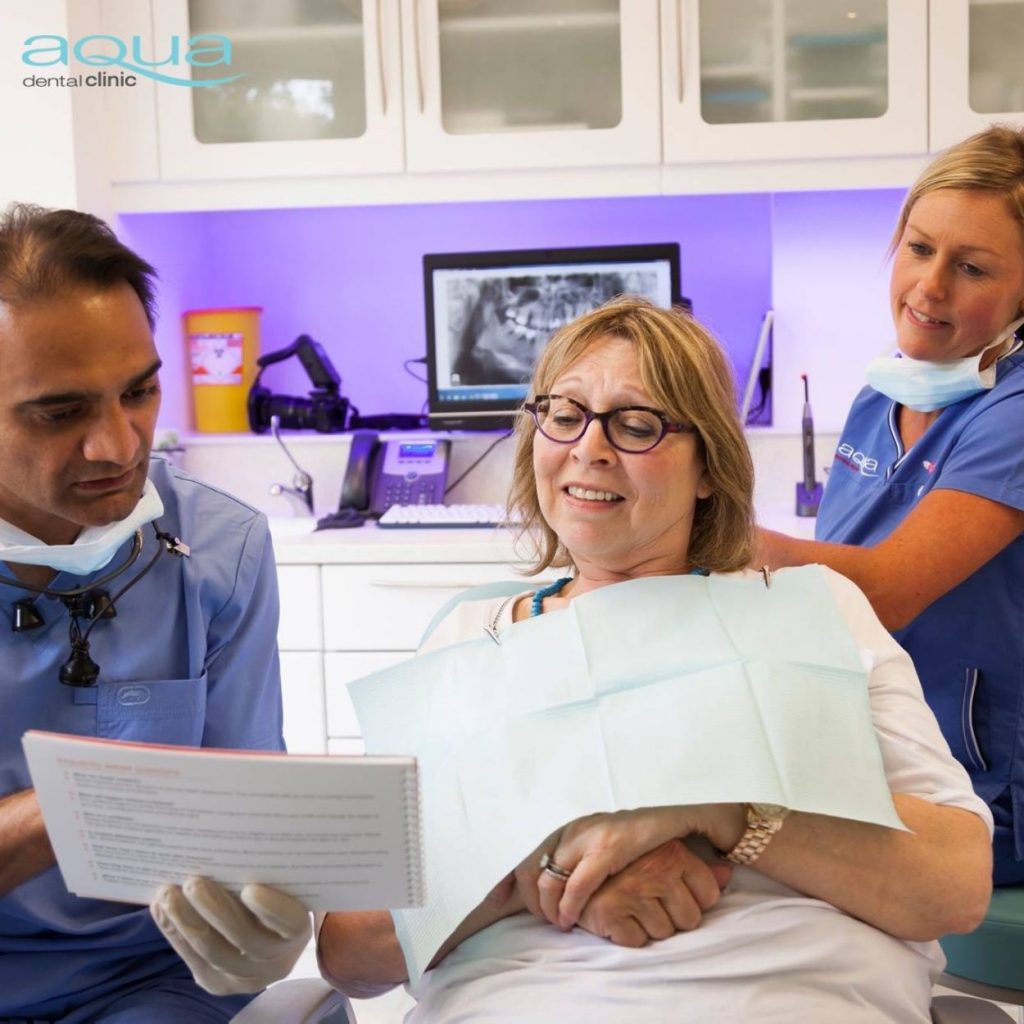
1. Assessment and 3D scan. We map your bone volume and plan the exact implant position before anything is placed.
2. Implant placement. The titanium implant is placed into the jawbone under local anaesthetic, with sedation available for anxious patients or more involved cases.
3. Healing and osseointegration. The implant fuses with the surrounding bone over several months, the stage that gives it its long-term stability.
4. Abutment and restoration. Once healing is confirmed, an abutment is attached and your custom crown, bridge, or denture is fitted on top, completing the treatment.
Some cases allow for a temporary tooth to be fitted sooner, so you’re not without a visible tooth throughout healing; we’ll confirm whether that applies to you at your assessment.
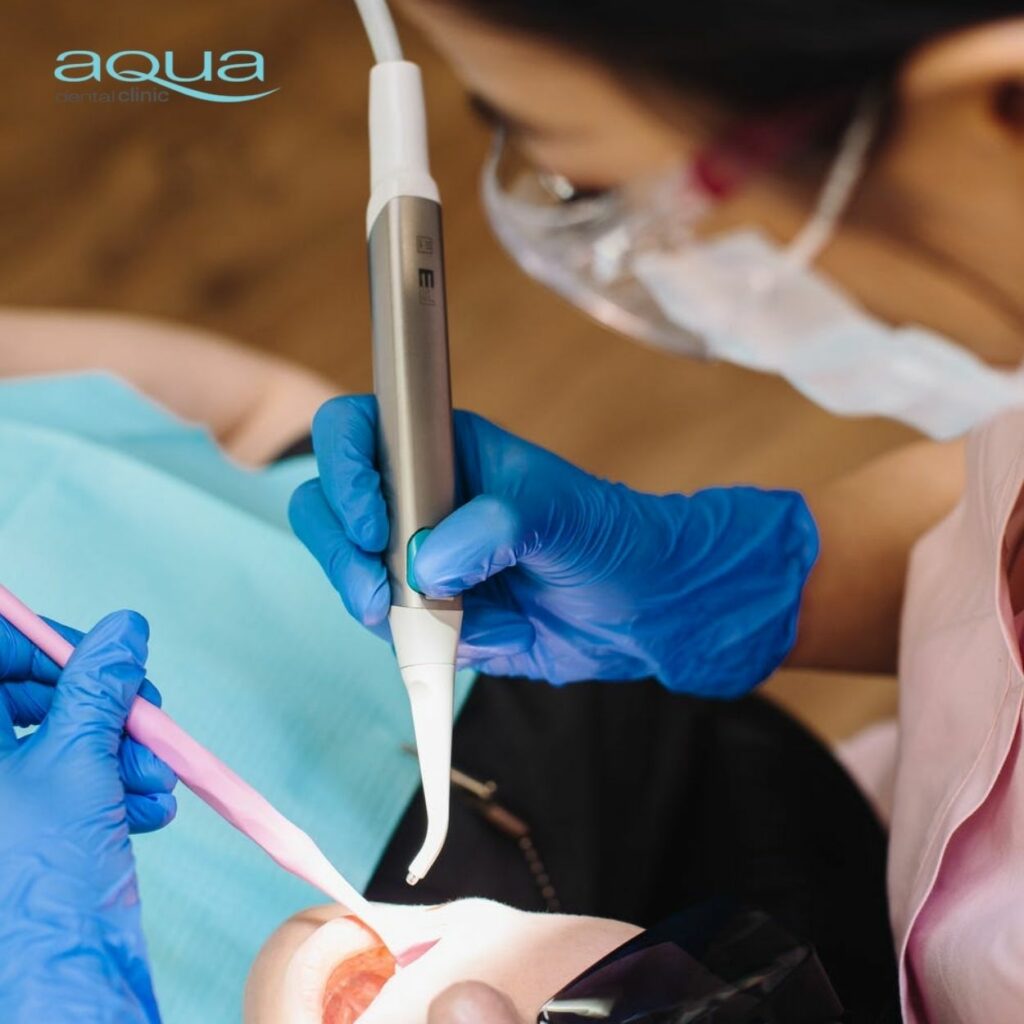

Initial healing after implant placement, meaning the gum settling and any swelling reducing, typically takes one to two weeks. Some tenderness and mild swelling in the first few days is normal and manageable with over-the-counter painkillers.
Full osseointegration, the bone actually fusing to the implant, takes considerably longer: usually three to six months, confirmed with a follow-up scan rather than guessed based on time alone. Only once that’s confirmed is the final crown, bridge, or denture fitted on top.
An implant isn’t the only way to replace a missing tooth, and it isn’t always the right choice for every situation. A traditional bridge replaces a tooth using the neighbouring teeth for support, avoiding surgery but requiring those teeth to be reshaped. Dentures remain a non-surgical, removable option, particularly for replacing several or all teeth, though they don’t stop the underlying bone loss the way an implant does.
We’ll only recommend an implant where it’s genuinely the best fit for your situation, health, and budget, and explain the trade-offs of the alternatives honestly rather than steering you toward the most involved option by default.
Dental implants at Aqua Dental Clinic start from £3,000 per unit, depending on complexity, confirmed at your examination. This covers a single implant; costs vary for bridges, All-on-4, or cases requiring bone grafting first.
Our payment plans and membership plans may also apply. Full current pricing, including for related treatments like bone grafting, is listed on our fee guide page. The only way to get an exact figure for your case is a scan and assessment.

Implant treatment only works as well as the planning behind it. Every case starts with a detailed 3D scan, not a guess based on an X-ray, so we know exactly how much bone is available and which approach genuinely fits. You can see that planning technology on our technology page.
If dental anxiety is part of what’s holding you back from a procedure that sounds more involved than it is, our nervous patients page explains how we handle that. New to the practice? Our new patients page walks through what your first visit looks like, and meet the team if you’d like to know who you’ll be seeing.
With good care, implants can last decades and are often considered a lifelong solution for the implant post itself, though the crown on top may need replacing after 10 to 15 years of normal wear.
The procedure is done under local anaesthetic, so you shouldn’t feel pain during placement. Expect some swelling and tenderness for a few days afterwards, similar to a tooth extraction.
Not necessarily. It depends on how much bone you have at the site, assessed with a 3D scan. Some patients have enough bone already; others need grafting first to create a stable foundation.
From placement to final restoration, most cases take three to six months, mainly due to the time needed for the implant to fuse with the bone. Cases requiring bone grafting first take longer.
An implant replaces a tooth root directly in the bone without affecting neighbouring teeth. A bridge uses the teeth either side of the gap for support, which means reshaping them, but avoids implant surgery.
Yes, most commonly through an approach like All-on-4, which uses a small number of implants to support a full arch of replacement teeth rather than one implant per missing tooth.
Availability depends on clinical need and individual circumstances. We can talk through both NHS and private routes at a consultation.
Implants at Aqua Dental Clinic start from £3,000 per unit, with the exact cost depending on complexity and confirmed at your examination.