



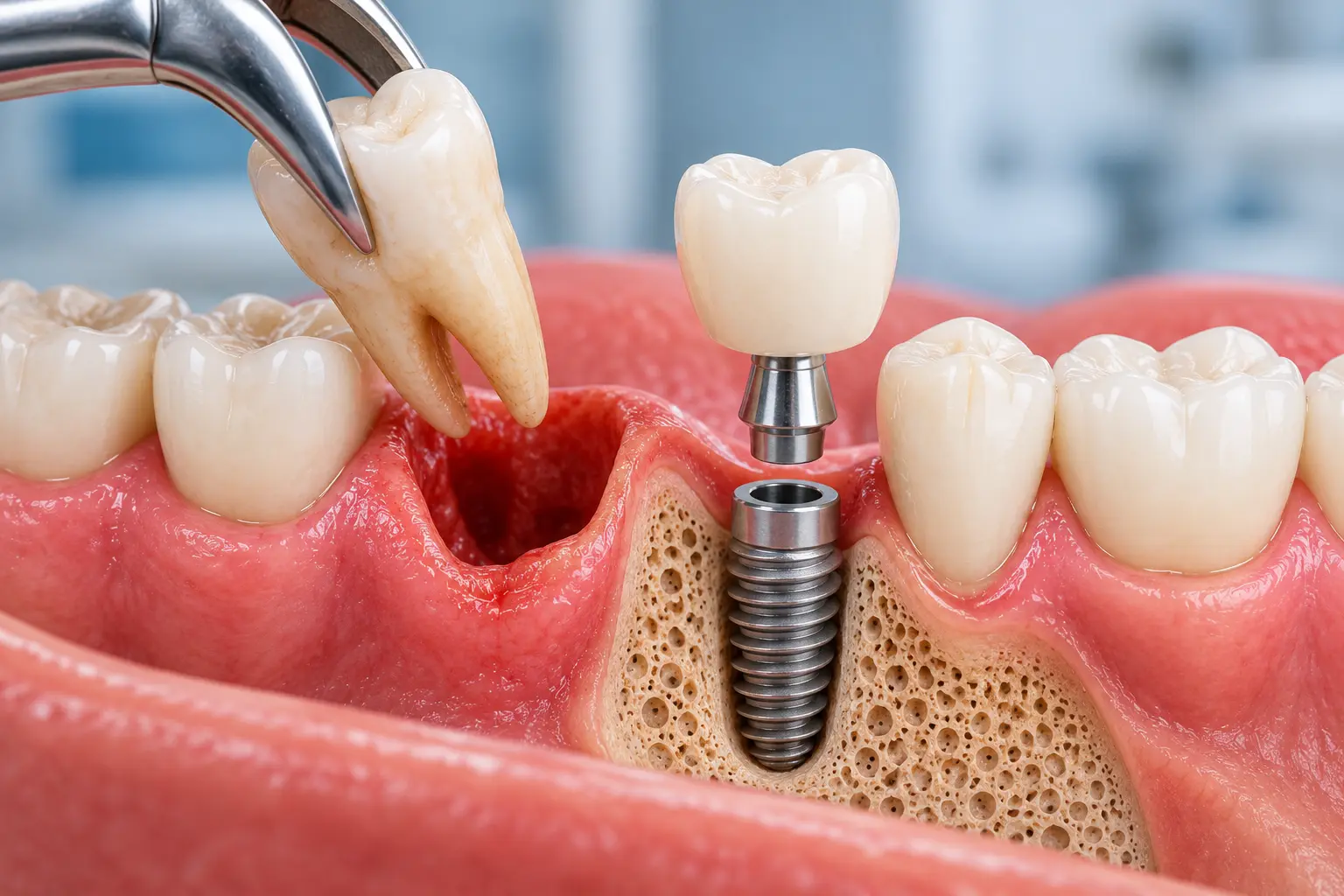
Sometimes on the same day, and sometimes after the area has had time to heal. Whether you can have an implant straight away depends on the condition of the bone and gum around the tooth, whether there is any infection, and how securely an implant would sit. Nobody can give you a fixed waiting time before looking at your mouth.
Here is how the different timings work, why we may recommend one over another, and what you can do to keep your options open.
Can an implant be placed on the day a tooth is removed?
In the right case, yes. This is called immediate placement. The tooth is taken out and the implant goes into the same socket during the same appointment.
It only works when the conditions are right. We look at whether:
- there is enough healthy bone around the socket
- the gum is healthy
- there is no active infection that needs treating first
- the implant can be held firmly in place when it goes in
- the position of the tooth suits it, since front and back teeth are very different
If any of these are doubtful, we would rather let the area heal first than place an implant on a weak foundation.
Immediate, early and delayed implant placement
There are three broad options, and which one fits depends on what we find.
| Timing | What it means | Often chosen when |
|---|---|---|
| Immediate | Implant placed at the same appointment as the extraction | The socket is healthy and the implant can be held securely |
| Early | Implant placed after the gum has healed over, usually a matter of weeks | The tooth was infected or the gum needs time before an implant can go in |
| Delayed | Implant placed after the bone has healed, usually some months later | More healing is needed, or a bone graft is part of the plan |
These are not good, better and best. They are different routes to the same result, and the right one is the one that gives the implant the best chance of lasting.
Why can’t everyone have an implant straight away?
An implant needs to hold firmly while it bonds with the bone. If a tooth has been lost to infection, gum disease or an injury, the socket may not be able to do that yet. Placing an implant too soon in those conditions can put the whole treatment at risk, so waiting is often the safer plan, not a delay for its own sake.
What if the tooth was infected?
An infected tooth does not rule out an implant. It usually means the infection is dealt with and the area is given time to settle first. In some carefully selected cases an implant can still go in at the time, but that depends on how far the infection has spread and what condition the bone is in. We will tell you plainly which applies to you.
What happens to the bone after an extraction?
Bone is kept in shape by the teeth it supports. When a tooth comes out, the bone around the space gradually shrinks. That is why we like to talk about replacing a tooth early: the sooner we can plan, the more of the bone we usually have to work with. You can read more about what happens if you delay replacing a missing tooth.
It does not mean you have missed your chance if some time has passed. It just means we may need to look more closely at the bone before planning.
Will you need a bone graft?
Not everyone does. If there is enough bone, the implant can go straight into it. If the bone has thinned or the socket was damaged, a bone graft can rebuild the area so the implant has solid support. A graft usually adds healing time before the implant, and sometimes it can be done as part of the extraction. Our guide explains whether you need bone grafting for dental implants in more detail.
Does same day placement mean a faster result?
Not always. Putting the implant in at the time of the extraction saves one appointment, but the implant still needs time to bond with the jawbone before the final tooth goes on. That bonding is the longest part of the process whichever route you take. For a fuller picture, see how long dental implant treatment takes.
Can you have a temporary tooth in the meantime?
Often, yes. Depending on where the tooth was and which type of implant treatment we plan, we can usually offer a temporary replacement so you are not left with a gap. We will tell you whether that is right for your case when we plan treatment.
What can affect the timing?
- Bone. Too little bone may need building up before an implant.
- Infection. It usually needs treating first.
- Gum health. Gum disease has to be under control. We cover this in can gum disease stop you getting dental implants.
- Position. Front teeth are more visible, and back teeth take more chewing force.
- Healing. Everyone heals at their own pace, and smoking can slow it down.
How to prepare after an extraction
Follow the aftercare we give you. Eat soft foods at first and avoid chewing on the site, keep the area clean as advised, and do not smoke if you can avoid it, because it affects healing. Book your implant consultation early, even if you are not sure you want one. A tooth extraction is the best moment to plan, because we can see the area at its freshest.
Frequently asked questions
Can I get a dental implant on the same day as an extraction?
Yes, in suitable cases. The socket needs healthy bone and gum, no active infection, and enough stability to hold the implant. If those are not in place, we will recommend letting it heal first.
How long should I wait for an implant after an extraction?
There is no single answer. Depending on your mouth it could be at the same appointment, after the gum has healed over, or after the bone has had longer to heal. We can give you a clearer idea once we have examined you.
Can I have an implant if the tooth was infected?
Usually, yes, but the infection normally has to be treated and the area allowed to settle first. In some selected cases an implant can still go in at the time.
Do I need a bone graft after a tooth is removed?
Only if there is not enough bone to support an implant. We check this with an examination and scans before planning.
What if I wait too long?
Bone shrinks over time after a tooth is lost, so it helps to plan early. If you have waited, an implant may still be possible, sometimes with a bone graft first.
Can I have an implant if I have gum disease?
Gum disease generally needs treating and keeping under control first, because healthy gums are important for an implant to last.
Are implants the only way to replace the tooth?
No. Bridges and dentures are also options, and we will talk through the pros and cons of each so you can choose what suits you.
Thinking about an implant after an extraction?
The sooner we can look at the area, the more options you tend to have. Get in touch to arrange a dental implant consultation at our Hatch End clinic, and we will explain what we would recommend and why.