



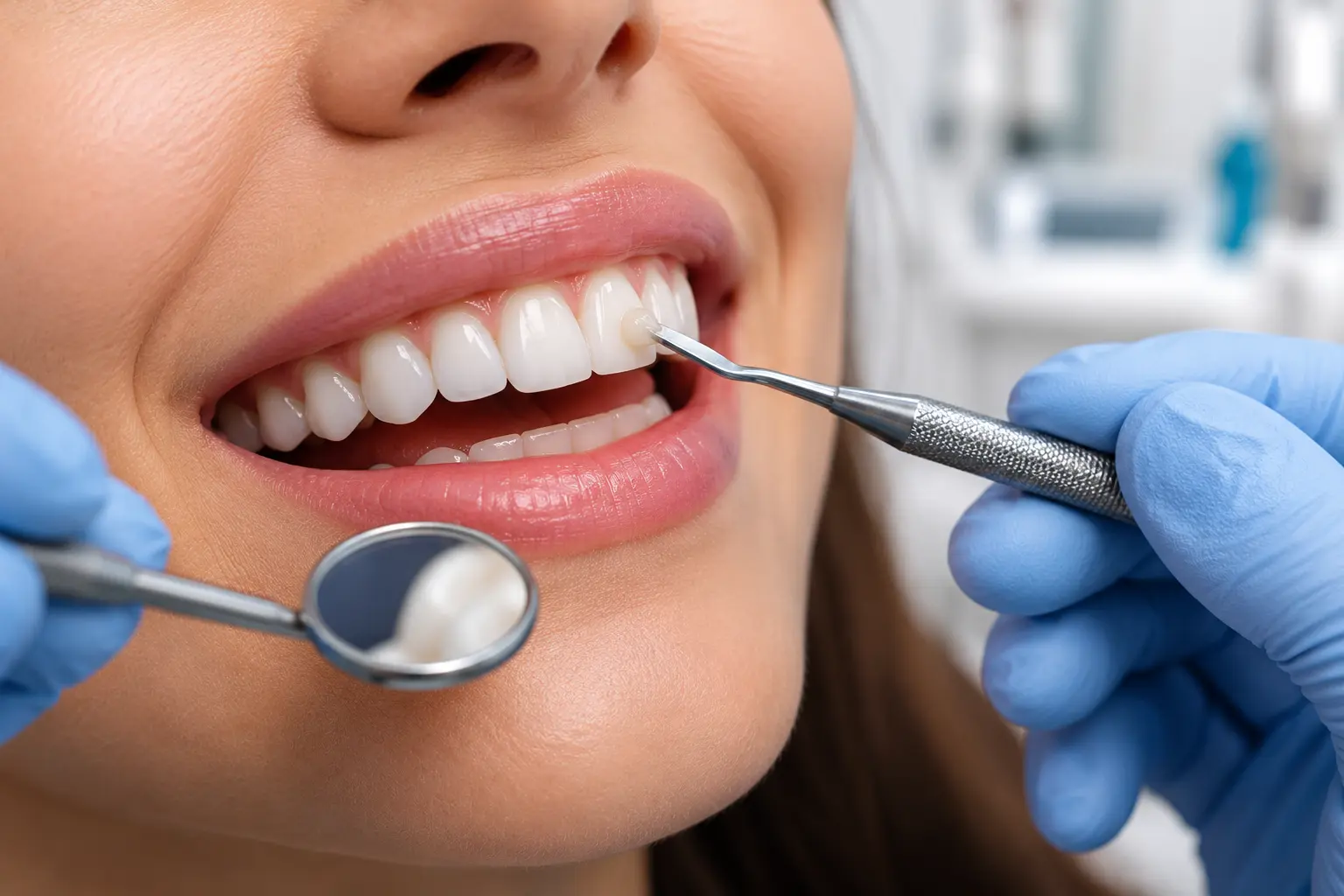
In most cases, composite bonding can be repaired rather than redone. A small chip or rough edge can often be built up and polished in a single visit, and the repair is usually matched to the surrounding tooth so it is hard to spot. Whether a repair or a full replacement is the better choice depends on how much of the bonding is affected and the state of the tooth underneath.
Here is what causes bonding to chip or wear, what a repair involves, and how to make the result last.
Why does composite bonding need repair?
Composite bonding is strong, but it is not as hard as natural enamel. Everyday life can wear it down, and a few things speed that up:
- biting into hard foods, or biting nails, pens and ice
- grinding or clenching your teeth, especially at night
- an accident or knock to the mouth
- the way your teeth meet, if the bite puts extra force on one tooth
- age, since all bonding wears with time
- staining from coffee, tea, red wine or smoking
How do you know if your bonding needs repair?
Sometimes it is obvious, like a visible chip. Often it is more subtle. Signs to look for are a rough or sharp edge, a small chip or crack, a change in the shape of the tooth, a patch that has darkened or stained, a surface that feels rough to your tongue, or a tooth that has become sensitive.
If you spot any of these, come and see us. A small chip left alone can grow, so it is easier to deal with early.
Can composite bonding be repaired?
Usually, yes. Because composite is built up in layers, we can often add to it rather than starting again. How far a repair can go depends on how much is damaged, whether the bonding is firmly attached, and the condition of the natural tooth.
What happens during a composite bonding repair?
The steps are straightforward.
- Assessment. We look at the bonding, the tooth underneath and the way your teeth bite together.
- Shade match. We choose a composite shade to blend with the tooth.
- Preparation. The area is cleaned and the surface lightly prepared so the new material bonds well.
- Building up. The composite is added and shaped, then hardened with a light.
- Polish. We finish and polish the surface so it feels smooth and looks natural.
If you feel nervous about dental treatment, tell us. We have plenty of experience looking after nervous patients, and we will go at your pace.
Does it hurt, and is drilling needed?
Repairs to small chips are often comfortable and may need little or no drilling, so many people do not need an injection. Larger repairs, or a tooth that is sensitive, may need more preparation, and we can numb the area if you would like us to. We will tell you what to expect before we begin.
Can a small chip be fixed without replacing all the bonding?
Yes. If the rest of the bonding is sound, a small chip can be repaired locally by adding new composite and blending it in. That is usually quicker and keeps more of your existing work.
What if the tooth underneath is damaged?
Sometimes a chip in the bonding is a sign that something deeper is going on, such as a crack in the tooth, decay under the edge, or a worn area. In that case we would look at the tooth first. Bonding is only as good as what it is stuck to, so a repair may need to be bigger, or a different treatment may suit better.
What if the bonding keeps chipping?
Repeated chips are a clue that something is putting the bonding under extra stress. Common causes are grinding or clenching, a bite that hits one tooth too hard, or a habit such as nail biting. We can look at why it keeps happening and talk about options, which might include a night guard if you grind. There is more on this in our post on how tooth grinding harms teeth.
Can stained bonding be repaired?
Composite can pick up stain over time, particularly from coffee, tea, red wine and tobacco. A polish can sometimes refresh the surface, and we can replace or resurface bonding that has discoloured. Whitening does not change the colour of existing bonding, so if you are thinking about teeth whitening it is best to do it before any bonding is placed or replaced, so the shades can be matched.
How long does a repair take?
A small repair is often done in one visit and is quicker than the original treatment. A larger repair, or replacing bonding across several teeth, takes longer. We will give you an idea once we have looked at your teeth.
Will repaired bonding look natural?
A well done repair should blend in, because we match the shade and finish the surface to the tooth around it. The result depends on how much of the original bonding is left and how well the shades match, so older bonding that has stained may be harder to blend with. In that case we might suggest replacing it for the best finish.
Is it better to repair or replace bonding?
Repair makes sense when the bonding is sound overall and the problem is one small area. Replacement is the better choice when the bonding is old, stained throughout, worn down or loose. Sometimes the honest answer is that a repair would only be a short term fix, and we will tell you if that is the case.
Could veneers be an alternative?
For some people, yes. If bonding keeps wearing, or you want something more resistant to staining, porcelain veneers can be a good option. Both have their place, and our post on veneers versus composite bonding explains the difference.
What if you had bonding after Invisalign?
Some people have bonding to finish off their smile after Invisalign. If that bonding chips or wears, it can be repaired in the same way. Because your bite has changed with the treatment, we will check how your teeth meet.
How to protect repaired bonding
- Avoid biting hard foods and objects with your front teeth. Cut food into smaller pieces.
- Wear a night guard if you grind your teeth.
- Wear a mouthguard for contact sport.
- Cut back on strongly coloured drinks, or rinse with water afterwards.
- Brush twice a day and keep up your hygiene appointments.
- Do not use your teeth as tools.
Frequently asked questions
Can chipped composite bonding be fixed?
Yes, in most cases. Small chips can usually be repaired by adding new composite and polishing it, often in one visit.
Does composite bonding repair hurt?
It is usually comfortable. Small repairs may need little or no drilling. If you are anxious or the tooth is sensitive, we can numb the area.
How long does repaired bonding last?
There is no fixed answer. It depends on where the tooth is, how you bite, whether you grind and how you look after it. With care, repaired bonding can last well.
Can you repair bonding more than once?
Often, yes, as long as the tooth underneath is healthy. If the same tooth keeps needing repair, it is worth finding out why, because that points to something putting it under pressure.
Can I eat normally afterwards?
Usually you can eat as normal once any numbness has worn off, but it is sensible to avoid very hard foods for a while. We will give you specific advice after your appointment.
Should I repair or replace old bonding?
That depends on its condition. If it is stained all over, worn or loose, replacing it often gives a better result than patching it. We can tell you which makes sense once we have seen it.
Chipped or worn bonding? We can help
If your composite bonding has chipped, stained or worn, get in touch and we will take a look at our Hatch End clinic. We will tell you whether a repair will do the job or whether replacing it would give you a better, longer lasting result.