



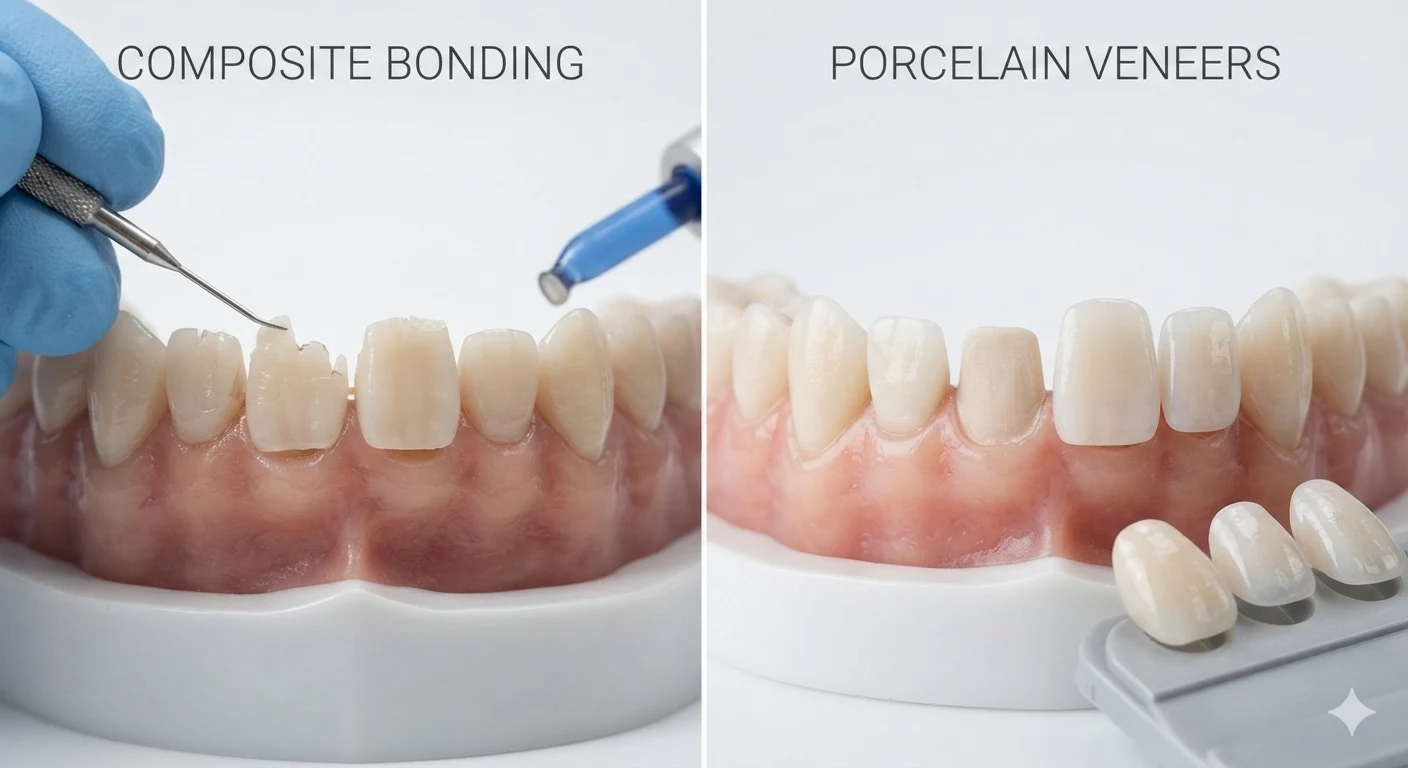
Chipped, uneven, or slightly misshapen teeth can affect the appearance of your smile and your confidence. Fortunately, modern cosmetic dentistry offers several ways to improve the shape, symmetry, and appearance of teeth without necessarily requiring extensive treatment.
Two popular options are porcelain veneers and composite bonding. Both can improve chipped or uneven teeth, but they work in different ways and offer different benefits in terms of appearance, durability, treatment time, and cost.
At Aqua Dental Clinic, we help patients understand their cosmetic dentistry options and choose treatment based on their teeth, oral health, lifestyle, and smile goals. So, which is better for chipped or uneven teeth? The answer depends on your individual circumstances.
What Is Composite Bonding?
Composite bonding is a minimally invasive cosmetic dental treatment that uses tooth-coloured composite resin to reshape or improve the appearance of teeth.
Your dentist applies the composite material directly to the tooth before carefully shaping and polishing it to achieve the desired appearance. The material can be used to repair small chips, improve uneven edges, close minor gaps, and alter the shape of teeth. If gaps between teeth are your main concern, our guide on whether composite bonding can fix gaps between teeth goes into more detail.
One of the main advantages of composite bonding is that it often requires little or no removal of healthy tooth enamel. This makes it a conservative option for patients who want to make relatively small cosmetic changes.
What Are Porcelain Veneers?
Porcelain veneers are thin, custom-made ceramic restorations that are bonded to the front surfaces of teeth.
They are individually designed to complement your natural teeth and can improve colour, shape, symmetry, and overall smile appearance. Veneers can be particularly useful when several cosmetic concerns need to be addressed at the same time.
Porcelain is also highly aesthetic and resistant to staining, allowing veneers to maintain their appearance with appropriate care and regular dental maintenance.
Veneers vs Composite Bonding: Key Differences
Although both treatments can improve chipped and uneven teeth, there are several important differences to consider.
Appearance
Both composite bonding and porcelain veneers can produce attractive, natural-looking results.
Composite resin can be matched to the colour of your existing teeth and shaped carefully to create a harmonious smile. However, porcelain generally provides a more translucent appearance that closely resembles natural tooth enamel.
Porcelain veneers may therefore be preferred when patients want a more comprehensive smile transformation or highly refined aesthetic results.
Durability
Porcelain veneers are generally more resistant to staining and wear than composite resin.
Composite bonding can be durable when properly maintained, but the material may become stained, chipped, or worn over time, particularly if you regularly consume strongly coloured foods and drinks or have habits such as biting your nails or chewing hard objects.
The longevity of either treatment depends on your oral hygiene, bite, lifestyle, and how well you care for your teeth.
Treatment Time
Composite bonding can often be completed in a single appointment, depending on the number of teeth being treated and the complexity of the case.
Porcelain veneers usually require more planning and multiple appointments because each veneer needs to be individually designed and manufactured before being bonded to the tooth.
If you want a relatively quick cosmetic improvement, composite bonding may therefore be more convenient.
Tooth Preparation
Composite bonding is generally considered a minimally invasive treatment because little or no enamel removal may be necessary.
Porcelain veneers usually require some preparation of the tooth surface to create sufficient space for the veneer. Your dentist will aim to preserve as much healthy tooth structure as possible while achieving an appropriate result.
This difference is important when deciding which treatment best matches your preferences and long-term goals.
Cost
Composite bonding is generally less expensive than porcelain veneers, particularly when treating a small number of teeth. Our composite bonding cost guide breaks down typical pricing per tooth if you want specific figures.
Porcelain veneers have a higher initial cost because they are custom-made restorations that require laboratory fabrication and more extensive treatment planning.
However, cost should not be the only factor you consider. The durability, aesthetic requirements, number of teeth being treated, and expected maintenance should all be taken into account.
When Is Composite Bonding the Better Choice?
Composite bonding may be a suitable option if you have relatively minor cosmetic concerns and want to improve your smile conservatively.
It may be appropriate for:
- Small chips
- Slightly uneven tooth edges
- Minor changes in tooth shape
- Small gaps between teeth
- Mildly worn teeth
- Small cosmetic imperfections
- Minor asymmetry
Composite bonding can be especially appealing if you want noticeable improvements without extensive preparation or a lengthy treatment process.
When Might Porcelain Veneers Be the Better Choice?
Porcelain veneers may be more appropriate when you want a more comprehensive or long-lasting cosmetic transformation.
They may be considered for:
- Multiple chipped teeth
- More noticeable changes in tooth shape
- Permanently stained or discoloured teeth
- Uneven or worn teeth
- Small gaps between several teeth
- Teeth with irregular shapes
- A broader smile makeover
If several teeth need to be treated, veneers can help create a consistent colour, shape, and overall appearance across the smile.
Which Treatment Looks More Natural?
Both composite bonding and porcelain veneers can look natural when carefully planned and professionally placed.
Porcelain veneers generally have an aesthetic advantage because porcelain has light-reflecting properties that closely resemble natural enamel. The ceramic material can also be carefully customised for colour, translucency, shape, and texture.
Composite bonding can also produce excellent results, particularly when used to make small changes to individual teeth.
The best choice depends on the extent of the cosmetic concerns and the type of result you want to achieve.
Which Is More Resistant to Staining?
Porcelain is naturally resistant to staining, which is one reason why porcelain veneers can maintain their colour well over time.
Composite resin is more susceptible to staining and may gradually become discoloured depending on your diet and lifestyle. Frequent consumption of coffee, tea, red wine, or other strongly coloured foods and drinks may contribute to staining.
Good oral hygiene and regular professional dental care can help maintain the appearance of both treatments.
What Happens During Composite Bonding?
Composite bonding is usually a straightforward treatment.
Consultation. Your dentist will assess your teeth, gums, bite, and overall oral health. They will discuss your concerns and establish whether composite bonding is suitable.
Tooth Preparation. The tooth is carefully cleaned and prepared so the composite material can bond securely to the surface.
Composite Application. Your dentist applies tooth-coloured composite resin to the affected tooth. The material is carefully shaped to improve its size, contour, and appearance.
Hardening and Polishing. A special light is used to harden the composite material. Your dentist then shapes and polishes the restoration to create a smooth and natural-looking finish.
In many cases, composite bonding can be completed during a single visit.
What Happens During Porcelain Veneer Treatment?
Porcelain veneer treatment generally involves several stages.
Smile Consultation. Your dentist will assess your teeth and discuss the changes you would like to make to your smile.
Treatment Planning. The size, shape, shade, and position of the veneers are carefully planned to complement your facial features and natural teeth.
Tooth Preparation. A small amount of enamel may be removed from the front surface of the teeth to create space for the veneers.
Impressions or Digital Scans. Detailed impressions or digital scans are taken so your bespoke veneers can be created accurately.
Veneer Placement. Once the veneers have been manufactured, they are carefully bonded to the teeth. Your dentist checks the fit, appearance, and bite before completing the treatment.
For patients looking for a more comprehensive smile transformation, veneers may form part of a wider cosmetic dentistry treatment plan or a full smile makeover.
Can Composite Bonding Be Repaired?
One advantage of composite bonding is that it can often be repaired or modified if a small area becomes chipped or damaged.
This can make maintenance relatively straightforward.
However, repeated damage may indicate that the underlying bite or lifestyle habits need to be addressed. Patients who grind or clench their teeth may benefit from discussing protective measures with their dentist.
Can Porcelain Veneers Be Repaired?
Porcelain veneers are strong and durable, but they can still become damaged through trauma, excessive biting forces, or certain habits.
If a veneer becomes significantly chipped or fractured, it may need to be replaced rather than repaired.
This is why good oral hygiene, regular dental examinations, and avoiding habits such as biting hard objects are important for protecting veneers.
Veneers vs Composite Bonding: Which Lasts Longer?
Porcelain veneers generally have greater resistance to staining and everyday wear than composite bonding.
However, neither treatment should be considered completely permanent. The lifespan of your restoration depends on factors such as:
- Your oral hygiene
- Your bite
- Teeth grinding or clenching
- Diet and lifestyle
- The number of teeth treated
- Your general dental health
- Regular dental examinations
- How well you follow aftercare advice
Taking care of your restorations can help maximise their lifespan and maintain their appearance.
Which Treatment Is Less Invasive?
Composite bonding is generally the more conservative treatment.
Because composite resin can be added directly to the surface of a tooth, little or no enamel removal may be required in suitable cases. This makes bonding an attractive option for patients who want to preserve their natural tooth structure.
Porcelain veneers usually involve some enamel preparation. Your dentist will explain exactly what preparation is required before treatment begins.
If preserving as much natural tooth structure as possible is your priority, composite bonding may be worth considering.
Can You Combine Veneers and Composite Bonding?
In some cases, your dentist may recommend a combination of cosmetic treatments.
For example, porcelain veneers may be used on several prominent front teeth while composite bonding is used to make smaller adjustments elsewhere in the smile.
A combination approach can sometimes provide a balanced result while keeping treatment as conservative as possible.
Your dentist can assess your smile and explain whether combining treatments would be appropriate.
Veneers vs Composite Bonding: Which Is Better for Chipped Teeth?
For a small chip affecting an otherwise healthy tooth, composite bonding may be an excellent option. It can restore the missing area quickly and conservatively while maintaining the natural structure of the tooth.
For multiple chipped teeth or more extensive changes to tooth shape, porcelain veneers may offer greater durability and a more comprehensive aesthetic result.
The best treatment depends on the size of the chip, the condition of the tooth, your bite, and your cosmetic goals.
Veneers vs Composite Bonding: Which Is Better for Uneven Teeth?
Composite bonding can be effective for small differences in tooth length or shape. Your dentist can add resin to specific areas to create a more symmetrical appearance.
Porcelain veneers may be more suitable when several teeth are uneven, worn, misshapen, or discoloured and you want a more extensive smile transformation.
If the uneven appearance is caused by an underlying alignment problem, orthodontic treatment may be more appropriate than cosmetic reshaping alone. Invisalign may be an option for suitable patients who want to straighten their teeth discreetly.
How Much Maintenance Do They Require?
Both treatments require good oral hygiene and regular professional care.
To protect your cosmetic dental treatment:
- Brush twice daily with fluoride toothpaste.
- Clean between your teeth every day.
- Attend regular dental examinations.
- Attend hygiene appointments as recommended.
- Avoid biting ice, pens, fingernails, or other hard objects.
- Limit foods and drinks that can cause staining.
- Wear a night guard if recommended for teeth grinding.
- Contact your dentist if your restoration becomes chipped or damaged.
Although veneers and bonding improve the appearance of your teeth, they do not replace the importance of maintaining healthy teeth and gums.
Is Cosmetic Dental Treatment Painful?
Composite bonding is usually a comfortable procedure and often requires little or no drilling.
Porcelain veneer treatment may involve some tooth preparation, which is generally carried out under local anaesthetic where necessary. Your dentist will discuss the procedure with you and ensure you understand what to expect before treatment begins.
If you experience dental anxiety, let your dental team know. They can discuss ways to make your treatment as comfortable and stress-free as possible.
Why Choose Aqua Dental Clinic?
At Aqua Dental Clinic, we understand that every smile is different. Rather than recommending the same cosmetic treatment for every patient, our team assesses your teeth, oral health, facial features, and individual goals before developing a personalised treatment plan.
We provide:
- Personalised cosmetic dental consultations
- Porcelain veneer treatment
- Composite bonding
- Smile makeover planning
- Modern digital treatment planning
- Natural-looking cosmetic results
- Conservative treatment approaches where appropriate
- Comprehensive aftercare and maintenance advice
- A patient-centred approach to cosmetic dentistry
Our goal is to enhance your smile while maintaining the health, function, and natural appearance of your teeth.
So, Which Is Better: Veneers or Composite Bonding?
There is no single answer because the better treatment depends on your teeth and what you want to achieve.
Composite bonding may be better if you:
- Have small chips or imperfections
- Want a minimally invasive treatment
- Prefer a quicker procedure
- Want to make subtle changes
- Have a smaller cosmetic budget
Porcelain veneers may be better if you:
- Want a more comprehensive smile transformation
- Have several chipped or uneven teeth
- Want highly aesthetic, stain-resistant restorations
- Prefer greater resistance to everyday wear
- Are looking for a longer-term cosmetic solution
The most appropriate option can only be determined after a professional assessment of your teeth, gums, bite, and cosmetic goals.
Book Your Cosmetic Dentistry Consultation
If you are unsure whether veneers or composite bonding is right for your chipped or uneven teeth, Aqua Dental Clinic can help you make an informed decision.
Our team will assess your smile, discuss your concerns, explain the advantages and limitations of each option, and recommend a treatment plan that suits your individual needs.
Book a consultation with Aqua Dental Clinic today to discover how cosmetic dentistry can improve the appearance of your chipped or uneven teeth.
Frequently Asked Questions About Veneers and Composite Bonding
Q: Are veneers better than composite bonding?
A: Neither treatment is universally better. Porcelain veneers generally offer greater stain resistance and durability, while composite bonding is more conservative, quicker, and usually less expensive. The right option depends on your teeth and cosmetic goals.
Q: Is composite bonding cheaper than veneers?
A: Composite bonding is generally less expensive than porcelain veneers. However, the total cost depends on the number of teeth being treated and the complexity of your case.
Q: Which looks more natural, veneers or bonding?
A: Both can produce natural-looking results. Porcelain veneers generally offer a higher degree of translucency and can closely replicate the appearance of natural enamel, while composite bonding can provide excellent results for smaller cosmetic changes.
Q: Does composite bonding damage your teeth?
A: Composite bonding is generally a minimally invasive treatment and often requires little or no removal of healthy enamel. Your dentist will assess your teeth and explain the preparation required before treatment.
Q: How long does composite bonding last?
A: The lifespan of composite bonding varies depending on oral hygiene, diet, bite, lifestyle, and maintenance. It can require repair or replacement over time, particularly if it becomes chipped or stained.
Q: How long do porcelain veneers last?
A: Porcelain veneers can provide long-lasting results when properly cared for, although they are not considered permanent. Good oral hygiene, regular dental visits, and avoiding excessive biting forces can help extend their lifespan.
Q: Can bonding fix a chipped tooth?
A: Yes. Composite bonding is commonly used to repair small chips and reshape uneven tooth edges. However, larger fractures or teeth with significant structural damage may require a different restorative treatment.
Q: Can veneers fix uneven teeth?
A: Porcelain veneers can alter the shape, size, and appearance of suitable teeth and may improve the appearance of uneven or misshapen teeth. If unevenness is caused by significant tooth misalignment, orthodontic treatment may be more appropriate.
Q: Can I have composite bonding after Invisalign?
A: Yes, composite bonding may be used after orthodontic treatment to make minor changes to tooth shape or repair small imperfections. Your dentist can assess whether bonding is appropriate once your teeth have been properly aligned.
Q: How do I know whether veneers or bonding are right for me?
A: A professional dental assessment is the best way to determine which treatment is appropriate. At Aqua Dental Clinic, we consider your oral health, tooth structure, bite, aesthetic goals, and long-term expectations before recommending treatment.