





Dental Crowns & Bridges
available to patients across London
If you have decayed or broken teeth or want to improve the overall aesthetics of your smile, dental crowns and bridges could be the solution. These treatments provided by expert restorative dentist Dr Neera Maini are also used after root canal surgery. See crowns.
Treating thousands of patients over more than two decades in practice, Dr Neera Maini has established a reputation among London’s foremost providers of crown and bridge treatments.
The reason isn’t just peerless quality of work and unrivalled experience in the field. It’s also down to Dr Maini’s unique treatment philosophy, which puts you, the patient, at the centre of every aesthetic and clinical decision.
At Aqua Dental, every single crown is crafted with precision, care and pride in a process guided by your choice of fit, materials, colour, texture and more.
Dr Maini’s experience and training in dental crown work, as well as the cutting-edge technology used to create the finished piece, are the reasons why so many patients turn to them for a second opinion on crown and bridgework received elsewhere. And why thousands of patients who want to be sure of receiving the best quality service available put their trust in Aqua Dental Clinic.
Dental Crowns
Dental crowns – sometimes referred to as caps – are used during dental restoration work to fit over your natural teeth. They protect from further damage while improving the look of your smile with renewed shape and colour.
Dental Bridges
Dental bridges are another restorative treatment used when a tooth is missing. Crowns are placed on each side of the gap, connected to a false tooth which sits in place of the lost one.
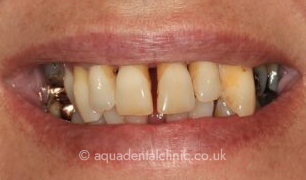
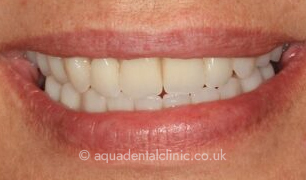
Smile Transformations
Before
After
Your Choice
We believe in patient choice, so we offer several options for crown and bridge treatments. If you’d prefer more traditional hand-made ceramic crowns, this can be done by our expert ceramists using the highest standard materials. All of our ceramic treatments are of the highest quality – guaranteeing reliable, durable results that look fantastic.
Patients Are Talking About Aqua Dental Clinic
Hear what they’re saying below
Please email us at hello@aquadentalclinic.co.uk or use the online form below.
Fields with (*) are required.
Please contact us via this website or email without disclosing confidential information.
Frequently Asked Questions
How long do dental crowns last?
The lifespan of dental crowns largely depends on the type of crown you have and how well you take care of it. Generally, dental crowns can last anywhere from 5 to 15 years, but some can last even longer with proper care and maintenance.
Permanent crowns, made from materials like metal, porcelain fused to metal, or ceramic, are known to be the most durable and long-lasting. They can withstand normal wear and tear from daily use and can last for many years if properly cared for. On the other hand, temporary crowns are designed to be used for short-term use only and are not intended for long-term wear.
Proper care and maintenance also play a crucial role in the longevity of dental crowns. Good oral hygiene practices such as brushing and flossing regularly not only help to keep your natural teeth healthy but also the crown itself. It’s important to avoid certain hard, sticky or chewy foods that could damage the crown or cause it to come loose. Regular dental check-ups are also important to ensure that your crown is still in good shape and functioning as it should.
With proper care, your dental crown can remain in good condition and help to maintain a healthy, natural-looking smile for many years.
How to take care of my dental crown?
Once you’ve received your dental crown, it’s important to take good care of it to ensure it lasts as long as possible. Crowns can be made from a variety of materials, including metal, porcelain fused to metal, and ceramics, and each one requires slightly different care. Here are some general tips to help take care of your dental crown:
- Practice good oral hygiene: Just like with your natural teeth, it’s important to brush your crown twice a day and floss at least once a day. This helps to remove any plaque buildup that can lead to decay around the crown.
- Avoid hard or sticky foods: While your dental crown is strong, it’s important to avoid biting down on hard objects like ice or opening packages with your teeth. Sticky or chewy foods like caramel and taffy can also cause damage or dislodge the crown.
- Visit your dentist regularly: Regular dental check-ups allow your dentist to monitor the health of your crown and make any necessary adjustments. Your dentist can also clean the crown to remove any plaque or tartar buildup.
- Consider a nightguard: If you grind your teeth at night, a nightguard can help protect your crown from damage.
- Watch for signs of trouble: If you experience sensitivity, pain, or swelling around your crown, it’s important to see your dentist. These can be signs of a problem with the tooth underneath the crown.
By following these tips and taking good care of your dental crown, you can help ensure it lasts for many years to come. Remember to speak with our dentist if you have any concerns or questions about caring for your crown or if you notice any changes in your oral health.
Are dental crowns painful?
One of the most common questions people have about getting a dental crown is whether or not it will be painful. The short answer is that the procedure itself is not usually painful thanks to the use of local anaesthetic. However, some people may experience discomfort or sensitivity after the procedure.
During the dental crown procedure, your dentist will use a local anaesthetic to numb the area around the tooth. This means that you shouldn’t feel any pain while the dentist is preparing the tooth and fitting the crown. In some cases, your dentist may also offer sedation options if you feel anxious or nervous about the procedure.
After the procedure, it’s normal to experience some sensitivity in the tooth for a few days. This can be managed with over-the-counter pain medication like ibuprofen. Some people may also experience a little discomfort in their jaw as they adjust to the new shape of their tooth.
It’s important to note that in rare cases, dental crown placement can result in complications like nerve damage or an allergic reaction to the materials used in the crown. However, these complications are very rare and your dentist will take steps to minimise the risk.
If you’re concerned about whether or not getting a dental crown will be painful, our dentist can explain the procedure in more detail and answer any questions you may have. We can also work with you to manage any discomfort or sensitivity after the procedure.
Can anyone have a dental bridge?
Not everyone is a suitable candidate for a dental bridge. The success and longevity of a dental bridge depend on several factors, including the individual’s oral health and the type of bridge required.
To have a dental bridge, an individual must have healthy adjacent teeth to act as support for the bridge. In the case of a traditional bridge, neighbouring teeth on both sides of the gap must be strong enough to handle the pressure and force of the artificial tooth in between them. If these teeth are weak or compromised, a bridge may not be a feasible option.
Similarly, an individual’s gum tissue and jawbone structure must also be healthy enough to support the bridge. In cases of bone loss or gum disease, a bridge may not be the ideal choice unless additional treatment is completed to restore oral health.
Another factor to consider is the type of bridge required. Traditional bridges require the removal of some of the healthy tooth structure in neighbouring teeth to make room for the bridge. For individuals who have strong, healthy teeth surrounding the gap, other options like implant-supported bridges may be a better alternative.
Ultimately, whether a dental bridge is suitable for an individual depends on a case-by-case evaluation by a dental professional. A treatment plan can be tailored to the individual’s unique needs and oral health status to ensure the best possible outcome.
In conclusion, not everyone is a candidate for a dental bridge. A thorough evaluation by a dental professional is necessary to determine an individual’s suitability for a bridge and the best treatment plan to restore their oral health and natural smile.
How long does a dental bridge last?
Dental bridges are a common solution for replacing missing teeth, offering a natural-looking and functional option that can help improve oral health and confidence. However, for those considering a dental bridge, a common question is how long it will last.
The lifespan of a dental bridge can vary depending on several factors. In general, a dental bridge can last anywhere from 5 to 15 years or more with proper care. However, some bridges may need to be replaced sooner due to wear and tear or other factors.
One crucial factor in the longevity of a dental bridge is proper oral hygiene. Regular brushing and flossing can help keep the artificial tooth and surrounding teeth clean and free from decay. Additionally, regular dental check-ups are essential to ensure the bridge is in good condition and to detect any potential problems early on.
The type of bridge can also impact its lifespan. Traditional bridges, which rely on neighbouring teeth for support, may weaken the healthy teeth over time and cause them to become compromised, leading to the need for a replacement. Implant-supported bridges, on the other hand, can be a more durable option, as they rely on artificial tooth roots that are inserted into the jawbone.
Other factors that can impact the lifespan of a dental bridge include the individual’s bite, the strength and health of neighbouring teeth, the material used for the bridge, and the amount of wear and tear the bridge experiences over time.
Ultimately, the best way to ensure a dental bridge lasts as long as possible is to practice proper oral hygiene and schedule regular check-ups with a dental professional. With proper care and maintenance, a dental bridge can provide many years of a healthy and beautiful smile.
How many teeth can a dental bridge replace?
A bridge can be used to replace up to five missing teeth, without the need for implants or dentures-making it an economical choice for many people. Bridges require little maintenance and provide a permanent solution for multiple missing teeth.
The number of teeth that can be replaced depends on the type of bridge you choose and its design. Traditional bridges are the most common type and usually span at least three (or up to five) locations between existing natural teeth. This allows the bridge to restore chewing function as well as improve your appearance by replacing missing front or back teeth. If you have more than five gaps in your smile, you may want to consider alternative options like dental implants or removable dentures. Your dentist will help you determine which option is best for you based on your overall dental health, budget, and personal preferences.
