



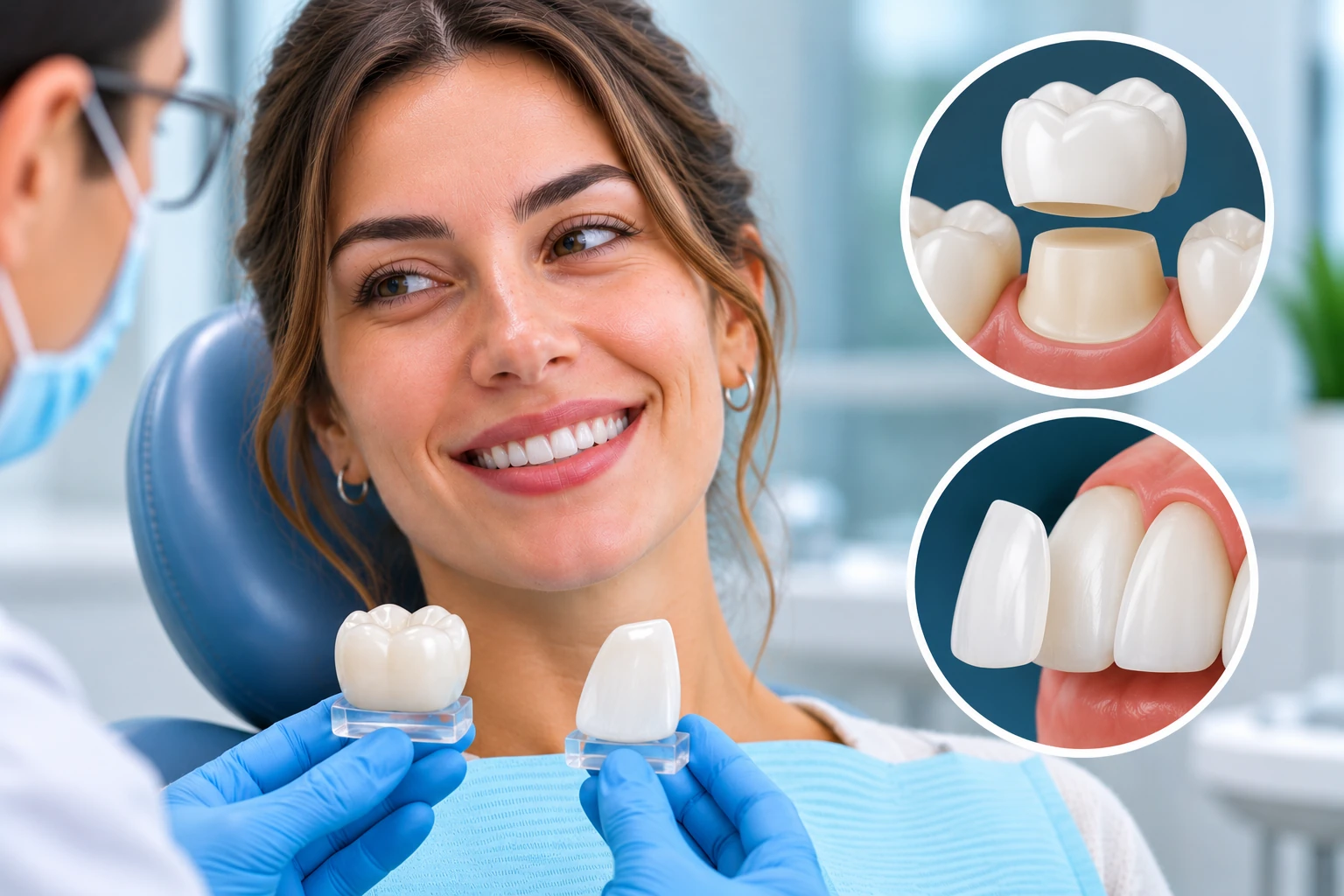
Both crowns and veneers can change how a tooth looks, which is why people often confuse them. They are designed for different jobs, though. Understanding the difference makes it easier to know which treatment fits your teeth and what you hope to achieve.
What is a veneer?
A veneer is a thin shell, usually porcelain, that is bonded to the front of a tooth. It improves colour, shape, size and minor alignment issues while keeping most of the tooth intact. Porcelain veneers are generally chosen for cosmetic reasons on teeth that are otherwise healthy.
What is a crown?
A crown covers the whole tooth above the gum, like a cap. It is used when a tooth is weakened, heavily filled, cracked, worn or has had root canal treatment. A dental crown restores strength and function as well as appearance.
Key differences
- Coverage: veneers cover the front surface, while crowns cover the entire tooth
- Purpose: veneers are mainly cosmetic, while crowns are mainly restorative
- Preparation: veneers usually need less of the tooth removed than crowns
- Tooth condition: veneers suit reasonably healthy teeth, while crowns suit damaged ones
Which is right for you?
A veneer may suit you if your teeth are healthy but stained, chipped, slightly uneven or have small gaps. A crown is more likely to be recommended if the tooth has a large filling, a crack, significant wear, decay or root canal treatment. In some cases either could work, and the decision rests on how much healthy tooth is left, your bite and your goals.
Grinding or clenching also plays a part, as it puts strain on both. If you grind your teeth, tell your dentist so protection can be planned.
What about composite bonding?
For minor chips or gaps, bonding can sometimes be a less invasive option. Veneers and composite bonding differ in a few ways that are worth knowing.
The best way to decide is a proper examination. Contact Aqua Dental Clinic to talk through your options.
Frequently Asked Questions
Are veneers or crowns more durable?
Crowns cover more of the tooth and suit teeth under greater load. Durability for both depends on the materials, your bite and how well you look after them.
Can I have a veneer on a root-treated tooth?
A crown is often recommended instead, as a tooth that has had root canal treatment is more brittle.
Do veneers and crowns need replacing?
Both can eventually need repair or replacement. Regular check-ups help catch problems early.
Are veneers or crowns reversible?
No. Preparing the tooth changes it permanently, so both are considered long-term treatments.