

Veneers come up in consultations for the same handful of reasons, over and over: a chipped front tooth that’s been bothering someone for years, teeth that never quite came in straight, staining that whitening won’t touch. If any of that sounds familiar, you’re probably here to work out what veneers actually involve. Not just what they look like in a before-and-after photo.
So that’s what this page does. No fluff: what they’re made of, what they can and can’t fix, how the appointments go, what they cost, and what’s worth asking before you commit to anything.
One thing worth saying upfront: we’re Aqua Dental Clinic, veneers here are provided by Dr Maini (more on his background further down). If you specifically want a veneers dentist, our veneers in has appointment details and directions. This page is the broader version, useful whether you’re local or just trying to understand the treatment.
A veneer is a thin shell, usually porcelain or composite resin, bonded onto the front of a tooth. Not the whole tooth, like a crown. Just the part you actually see when you smile.
That distinction matters more than it sounds like it should, because a veneer only covers the visible surface, less of your natural tooth needs to be shaved down to make room for it, compared with a crown.
Good veneers are matched to your natural enamel for colour, translucency, texture, the lot. Fitted well, nobody clocks them in conversation or in a photo. Fitted badly (too white, wrong shape, a bit bulky) and people notice, even if they can’t say exactly why.
Worth being upfront about this too: veneers are a cosmetic treatment. They change how a tooth looks, not what’s going on underneath it. If there’s decay or gum disease sitting under that discolouration, your dentist should deal with that first. Veneers aren’t a way to skip that conversation.
Veneers deal with how a tooth looks, not why it looks that way, a distinction dentists care about more than most patients do walking in. Here’s where they tend to earn their keep.
Discolouration that won’t budge with whitening (often from medication taken as a child, or a tooth that’s had root canal treatment) gets covered completely rather than lightened. Chips and small cracks get their shape rebuilt without going as far as a crown. Gaps between teeth (diastemas, if you want the technical term) can often be closed by slightly widening the visible edge of the tooth, which sometimes means skipping orthodontics altogether.
Then there’s the shape side of things. Teeth that are naturally small, pointed, or just an unusual shape can be evened out to match the rest of the smile. Worn edges, usually from years of grinding, can be built back up to their original length. Old fillings that have gone grey or yellow at the edge of a front tooth get hidden completely.
And slight misalignment (a tooth that’s a touch rotated or overlapping, not properly crooked) can be visually corrected too. Anything more than mild, though, and you’re better off looking at orthodontics instead. We’ll say so if that’s the case, rather than reach for a veneer anyway.
Three main options, and they’re not really interchangeable.
Porcelain is what most patients end up choosing, and there’s a reason for that: at around 0.5mm thick, it resists staining, holds its colour, and reflects light close to how real enamel does, which is the main reason it tends to look the most convincing. The trade-off is that a small amount of the tooth surface needs preparing to make room for it, and because it’s made in a lab, that’s two visits rather than one.
Composite is the quicker, cheaper route. Built up directly on the tooth in a single appointment, no lab involved. It just doesn’t hold up as well over time: more prone to staining, more likely to need redoing sooner.
Ultra-thin veneers (Durathin and Lumineer-style products fall into this category) go down to around 0.2 to 0.4mm. Thin enough that in a lot of cases, little or no tooth needs removing at all. Good if you’re mainly after a colour change or a subtle shape tweak and want to keep as much of your own enamel as possible. Not so good for heavy staining or a bigger shape change. There’s simply not enough material there to do the job.
Which one’s right for you isn’t really something to decide on your own. It depends on what you’re fixing, how much of your own tooth you want to keep, and what you’re willing to spend. That conversation happens properly at your consultation.
Since this is the choice most people actually agonise over, here it is side by side.
Porcelain lasts longer and resists staining better, but it needs a lab, so budget for two appointments over a week or two. Composite is faster (one sitting, your dentist shapes it right there) but it won’t hold up as long, and it stains more easily from the usual culprits: tea, coffee, red wine. (For actual timeframes, skip ahead to “How long do veneers last,” below.)
Price follows the same logic. Porcelain costs more per tooth because of the lab work and materials. Composite costs less to start with, but you may end up paying for repairs or replacements more often over the years. Neither wins outright. It comes down to how long you want the result to last, how fast you want it done, and what you’ve got to spend.

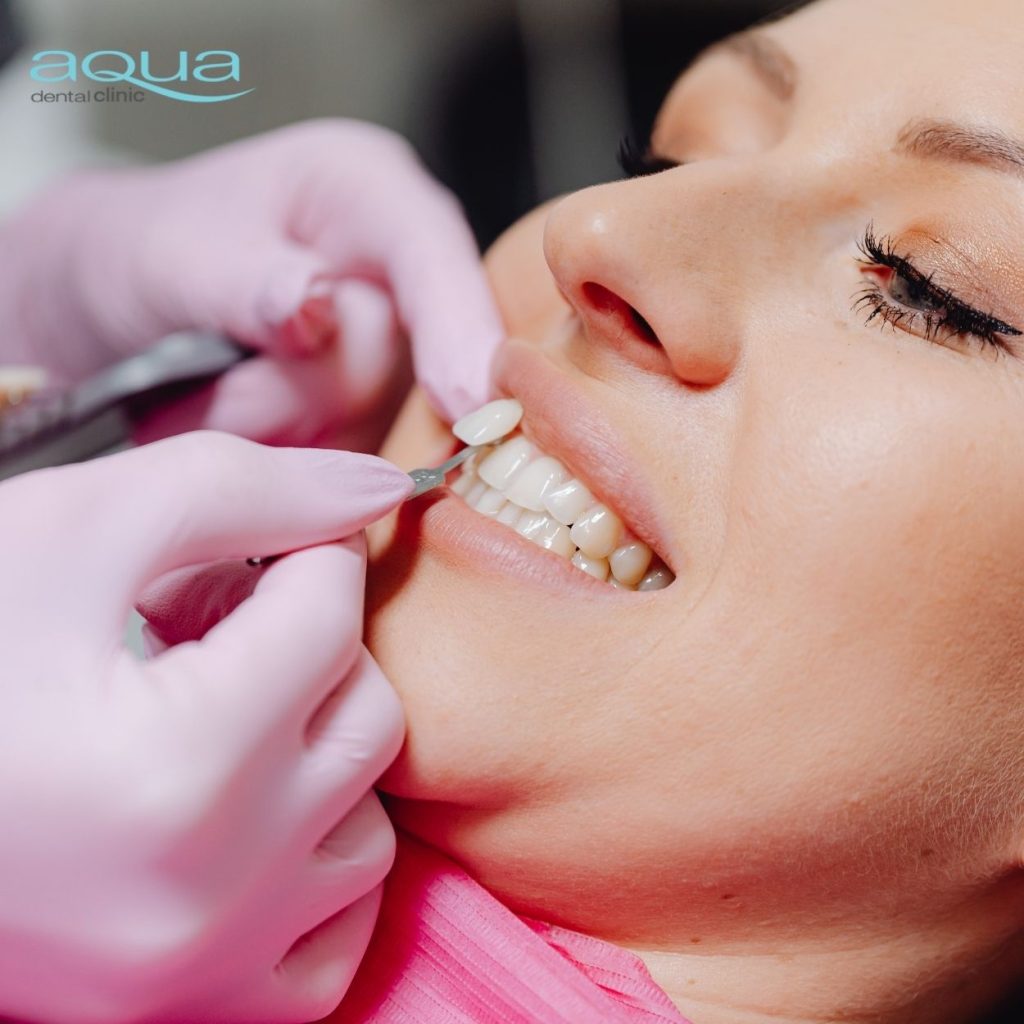
Three appointments, usually. Sometimes just one, if you’re going the composite route.
Composite skips steps 2 and 3 as separate visits entirely: it’s all done in one sitting, built up and shaped directly on the tooth. No temporary stage, no waiting around.
A bit of prep makes this appointment far more useful than just turning up and saying “make my teeth better.”
Bring photos of smiles you actually like, real ones, not vague words like “natural” or “brighter,” which mean something different to everyone. Think honestly about which teeth actually bother you when you talk or smile. Often it’s two or three, not all of them, and treating just those is usually enough. Mention any grinding or clenching, and whether you’ve tried whitening before and how that went. Both change what actually gets recommended.
Most people with reasonably healthy teeth and gums qualify. A handful of things are worth raising before you commit, though.
Active decay or gum disease needs treating first, veneers bond to natural tooth structure, so that has to be in good shape underneath. Same logic applies to enamel: porcelain especially needs a decent amount of healthy enamel to bond to, and if there’s very little left, a crown might actually be the better call.
Grind your teeth at night? Say so. Bruxism puts real pressure on veneers and is one of the more common reasons they chip or loosen, so your dentist will likely suggest a nightguard alongside them.
Be honest with yourself about scale, too. Veneers are excellent at covering, reshaping, lightening. They’re not built to fix a genuinely misaligned bite or move teeth into new positions, that’s orthodontics’ job, not ours.
Last thing: expectations. Veneers only look natural when the shade and shape actually suit the rest of your smile, and that gets decided at the planning stage, not fixed afterwards if you don’t like the result.

Porcelain, with decent care: 10 to 15 years. Composite: more like 4 to 8. After that, expect replacing or repairing, that’s normal wear, not a sign something went wrong.
A few habits actually move the needle. Brush and floss as normal; veneers don’t need special products, but the real tooth and gum underneath still do. Don’t use your front teeth as tools: no ripping open packaging, no chewing ice, that’s just asking for a chip. If you grind at night, wear the nightguard mentioned above, skipping it is the single most common reason porcelain cracks early. Keep up with check-ups so small issues, a loosening edge say, get caught before they turn into bigger ones. And if you’ve got composite, ease off the tea, coffee, red wine, and cigarettes a bit, since it stains more readily than porcelain does.
If something does chip or come loose, call your dentist. Don’t try to fix it yourself. Composite can often be repaired on the spot; porcelain usually needs remaking.
Not every case needs veneers, and a consultation that doesn’t at least mention alternatives isn’t much of a consultation.
If it’s a small chip or gap and you don’t want to commit to anything permanent, composite bonding does the job for less, with no reshaping of the tooth at all. It won’t last as long as porcelain, but as a starting point, it’s a reasonable one. Our cosmetic dentistry page covers bonding alongside our other treatments.
If colour is genuinely your only issue (shape and alignment are fine, it’s just shade), save yourself the money and whiten first. It’s simpler, cheaper, and less invasive than a veneer.
If teeth are actually crooked, rotated, or overlapping, not just slightly uneven, straightening them properly (with Invisalign or otherwise) usually gives a result that holds up better long-term than trying to mask it with veneers.
And if a tooth is heavily broken down or has had a lot of filling work over the years, a dental crown covers the whole tooth and offers more strength than a veneer ever will, since a veneer only covers the front.
A proper consultation weighs all of this against what you actually came in asking for, it doesn’t just nod along and book you in for veneers because that’s what you said on the phone.
Veneers here start from £1,000 per unit. That’s a starting point, not a quote, the material you choose, how many teeth are involved, and how complicated your case is all move that number, so you’ll get a proper written quote after your consultation, not before it.
We offer 0% finance over 12 months, and our payment plan and membership plans may apply too, depending on your situation. Veneers are cosmetic, so they’re not available on the NHS, everything here is private. Current fees are listed in full on our dental fees page.
A few things push the price up or down: material (composite costs less per tooth than porcelain), how many teeth you’re treating, whether anything needs sorting first (a filling, some gum work) and how fussy the shade-matching needs to be. Two people asking for “a few veneers” can walk away with genuinely different quotes once all that’s factored in. That’s exactly why we don’t put a single fixed price on a smile makeover online. It gets worked out properly, in the room, at your consultation.
Honestly, the material matters less than who’s actually doing the work. Planning and a steady hand make more difference to the final result than whether you picked porcelain or composite. Dr Maini has over 27 years of clinical experience and is recognised by the General Dental Council (GDC), the British Academy of Cosmetic Dentistry (BACD), and the British Dental Association (BDA).
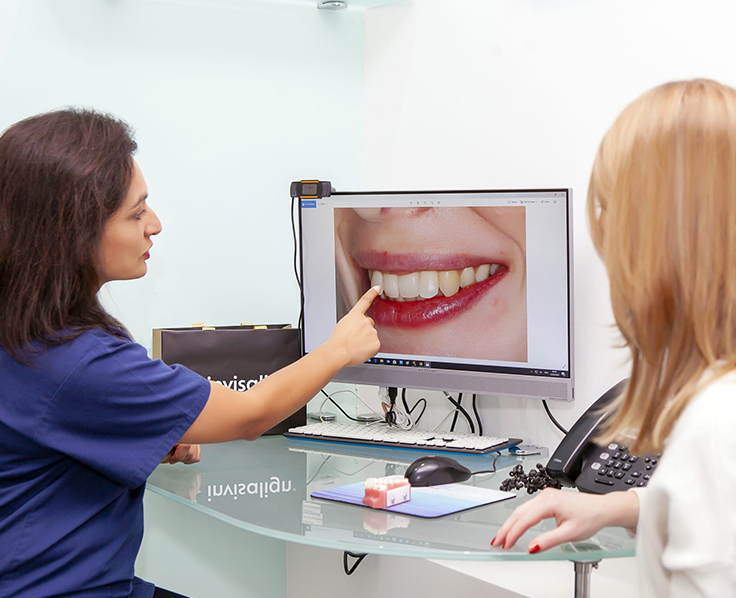
Every case starts with an actual conversation about what you want to change and why, not a standard treatment plan pulled off a shelf. We use modern imaging and planning technology so you can see and agree on the shape and shade before anything permanent happens, more on the equipment we use on our technology page. Curious about the wider team or the practice itself? Our About Us and meet the team pages cover that.
If you’re nervous, or this is the first cosmetic work you’ve ever looked into, our nervous patients and new patients pages explain what to actually expect, rather than just reassuring you in the abstract.
We treat veneers as part of a wider smile, not a standalone job. If something else needs sorting first (gum health, tooth position, an old filling), we’ll say so before touching anything, rather than fitting veneers over a problem that resurfaces later.
Photos tell you more than any description can, because “natural-looking” means something slightly different to everyone. Have a look at our smile gallery, and see what past veneer patients actually say about the experience on our testimonials page.
Porcelain (a dental ceramic) or composite resin, the same material used in white fillings. Porcelain’s made in a lab; composite gets shaped right there on the tooth, chairside.
Porcelain needs a small amount of enamel reshaped, which is why it’s considered a one-way decision. Composite can often go on with little or no prep at all. Ask your dentist exactly how much your case needs, it varies more than people expect.
Most patients feel next to nothing. Local anaesthetic covers any enamel prep, so the procedure itself shouldn’t hurt. A bit of sensitivity to hot or cold afterwards is normal and usually fades within days.
Depends entirely on what’s actually bothering you. One veneer fixes one chipped or discoloured tooth just fine. A full set across the visible teeth suits a bigger smile makeover. Nobody should be talked into more than they need.
Porcelain: two to three appointments over one to two weeks, mostly waiting on the lab. Composite: often just the one visit.
If you’re going porcelain, yes, fitted after your teeth are prepped so you’re not walking around with reshaped teeth on show while the real ones get made.
No, and this trips people up. Veneers don’t respond to whitening products the way enamel does. Whiten your natural teeth to the shade you want first, then the veneer gets colour-matched to that, not the other way round.
Ring your dentist, don’t wait it out. Composite can often be patched up directly. Porcelain that chips or comes away usually needs remaking, though the tooth underneath is generally fine in the short term.
Yes. Just treat them the way you’d treat your own teeth, don’t bite into whole apples or crunch ice with your front teeth, and you’ll be fine.
Composite, mostly yes, it can be removed and the tooth returns close to how it was. Porcelain, no. A layer of enamel is already gone, so that tooth will need a veneer, or something similar, going forward.
A little rotation or overlap, sure. Genuinely misaligned teeth, no, straighten those first, with or without veneers afterwards. Trying to mask real misalignment with veneers alone tends to disappoint.
No. They’re cosmetic, and the NHS covers clinical need, not appearance. It’s private treatment, full stop.
No hard cutoff, but we wouldn’t recommend them for teenagers or anyone whose teeth and jaw are still developing, you want the final tooth position and gum line settled first.
Fitted well, yes. Most patients say they forget they’re even there within a few weeks.
Absolutely, and it’s more common than people assume. The tricky part is shade-matching a single veneer to the teeth either side of it, which is exactly why your dentist takes extra care over colour when it’s just one or two teeth.
Your dentist compares shade samples against your teeth (or your target whitening shade) in natural light, and you’ll approve it before anything’s made. A lot of people go slightly lighter than their natural shade, brighter, but still believable.
Realistically, yes, nothing lasts forever, and porcelain outlasts composite. When the time comes, they’re usually just replaced, provided the tooth underneath is still healthy.