



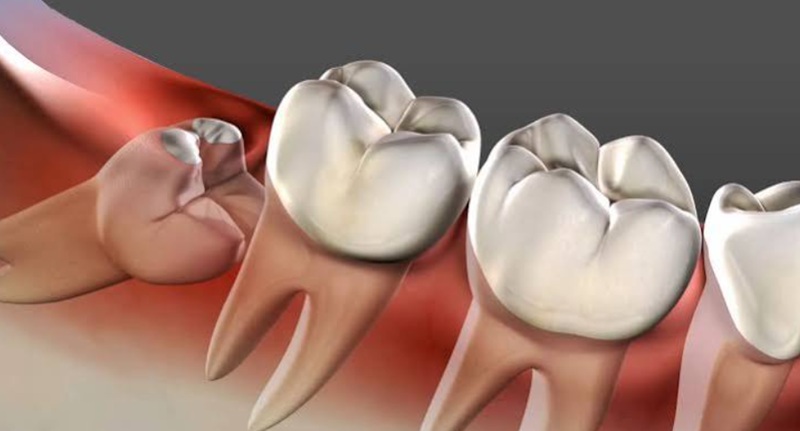
Wisdom tooth pain has a habit of turning up at the worst possible moment, often a dull ache at the back of the jaw that builds over a few days until chewing on that side is no fun at all. Sometimes it is sharp, sometimes it is a throb that reaches your ear, and sometimes the whole area feels swollen and tender. Most of the time it is your last molars trying to push through in a mouth that ran out of room for them years ago. Now and then it is a sign of something that needs seeing to quickly. This guide helps you tell the difference, ease the pain safely in the meantime, understand impaction and infection, and know what removal actually involves if it comes to that.
A quick primer: what your wisdom teeth are
Wisdom teeth are the third molars, the four teeth right at the back of the mouth, one in each corner. They are the last adult teeth to arrive, usually between about 17 and 25, long after everything else has settled into place. Some people get all four, some get one or two, and a lucky few never develop them at all. Because they turn up so late, the jaw is often already full, and that is the root of most of the trouble they cause.
Signs your wisdom teeth are coming through
The first signs are usually mild and easy to dismiss. You might notice a dull ache or pressure right at the back of the gum, a small flap of tender gum over a tooth you can just feel with your tongue, or a bit of swelling that makes the area feel tight. Some people get a bad taste, slightly sore glands, or find brushing that far back has become uncomfortable. A tooth genuinely erupting can take months to arrive, coming and going in waves rather than all at once, which is why the early signs are so easy to live with for longer than you should.
What wisdom tooth pain actually feels like
It varies more than people expect. A tooth pushing through tends to give a deep, throbbing ache at the back of the jaw. An inflamed gum flap adds a sharper, localised soreness that flares when you bite on it. Because the nerves back there are shared, the pain often refers elsewhere, so a wisdom tooth can show up as earache, a sore jaw joint, a headache on that side, or tender glands in the neck, with the tooth itself barely getting a mention. If your ear or jaw aches and the dentist can find nothing wrong with the ear, a wisdom tooth is a classic hidden cause.
Why wisdom teeth hurt
When there is not enough room, a wisdom tooth comes through at an angle, presses against the tooth in front, or only manages to break partway through the gum. Any of those can hurt. The most common culprit is a flap of gum over a half-erupted tooth. Food and bacteria collect underneath it, the gum becomes inflamed and sore, and you get that throbbing ache. Dentists call this pericoronitis. It tends to flare, settle, then flare again, which is why people put up with it far longer than they should.
Impacted wisdom teeth
A wisdom tooth is impacted when it cannot come through into its normal position, usually because the jaw is too full or the tooth is pointing the wrong way. This is extremely common and it is the single biggest reason wisdom teeth become a problem. Impaction comes in a few patterns, and the direction the tooth is leaning decides how much trouble it is likely to cause.
- Mesial impaction, where the tooth tilts forward towards the front of the mouth. This is the most common type, and it often traps food against the molar in front.
- Vertical impaction, where the tooth is upright but stuck below the gum with no room to finish erupting.
- Horizontal impaction, where the tooth lies on its side, sometimes pushing into the roots of the neighbouring tooth. This one tends to need attention.
- Distal impaction, where the tooth leans backwards towards the jaw joint, which can make removal more involved.
An impacted tooth does not always hurt, and one that is fully buried and causing no problems can often be left alone and monitored. The reason dentists keep an eye on them is that a partly impacted tooth is hard to clean, so it is prone to decay, gum infection, and occasionally a cyst forming around the buried crown. An x-ray is the only way to see what is really going on under the gum, which is why guesswork from symptoms alone only gets you so far.
When it is an infection
An infected wisdom tooth needs dealing with rather than waiting out. The signs to watch for are a throbbing pain that will not settle, swelling of the gum or cheek, a bad taste or a discharge of pus, difficulty opening your mouth fully, swollen glands under the jaw, and sometimes a raised temperature. A mild gum-flap infection can often be calmed with cleaning and good home care, but one that is spreading, with facial swelling or fever, is not something to sit on. The section below tells you where the line is.
Easing the pain at home, safely
None of this fixes the underlying problem, but it will take the edge off while you arrange to be seen.
- Rinse gently with warm salt water a few times a day. It is simple and it genuinely helps clean under an inflamed gum flap.
- Take over-the-counter pain relief as directed on the packet, if it is safe for you. Ibuprofen suits this kind of inflammatory ache well for many people.
- Keep the area clean even though it is tender. A soft brush and care around the back beats leaving it alone.
- Go easy on that side and avoid very hot or hard foods that set it off.
One thing to skip: holding an aspirin against the gum. It does not work and it can burn the tissue. And if you are relying on painkillers just to get through each day, that is your cue to book in rather than to buy a bigger box.
When to treat wisdom tooth pain as urgent
Most wisdom tooth pain can wait a few days for a normal appointment. Get seen the same day, or use our emergency dental care, if you have any of these:
- Facial swelling, or swelling that reaches your eye or neck
- Difficulty opening your mouth, swallowing or breathing
- Fever alongside the pain
- A bad taste or discharge, which can point to infection spreading
Does a painful wisdom tooth always need removing?
No, and this is worth saying plainly because a lot of people assume the answer is yes. If a wisdom tooth is coming through cleanly and the pain is just the temporary soreness of it erupting, it can be left alone to settle. Guidance in the UK moved away from taking out wisdom teeth as a routine precaution years ago, so a healthy, buried tooth that causes no trouble is usually just monitored.
Removal makes sense when the tooth keeps causing trouble: repeated infections, decay you cannot clean because of the angle, damage to the tooth next door, or a cyst forming around a buried tooth. The way to know which camp you are in is an x-ray and an honest conversation, not guesswork from a website. That is the one thing this article cannot do for you.
What removal actually involves
A straightforward wisdom tooth that has erupted comes out much like any other tooth extraction, under local anaesthetic, in a single visit. You feel pressure, not pain. An impacted tooth, or one lying under the gum, is a bigger job. It may need a small cut in the gum and sometimes the tooth is removed in sections, which sounds worse than it is and is still a routine, well-practised procedure. Complex cases are occasionally referred to a specialist, and we will always tell you honestly which kind of job yours is once we have seen the x-ray.
If the dread of the whole idea is what is stopping you, you are in good company, and it is not a reason to suffer. We treat a lot of anxious patients and have a page just for that on how we make it manageable, from a gentle chat first to sedation options, over on nervous patients.
Recovery, and the one complication to know about
For a simple extraction, the soreness eases over a few days and most people are back to normal within a week. A surgical removal takes a little longer, with some swelling for the first two or three days being normal. Keep the area clean, avoid poking it with your tongue, skip smoking and vigorous rinsing for the first day so the clot can settle, and stick to softer food while it heals.
The complication worth knowing about is dry socket, where the blood clot that should protect the healing socket is lost too early, leaving the bone exposed. It shows up as a deep, worsening ache two to four days after the extraction, often with a bad taste, and it is more common in smokers and after lower wisdom teeth. It is not dangerous and it is easily treated, so if the pain gets worse rather than better a few days on, come back and let us settle it rather than toughing it out.
How much does wisdom tooth removal cost?
At Aqua Dental, wisdom tooth removal starts from £450, and a simple extraction from £125, with the exact figure confirmed once we have taken an x-ray and can see what is involved. An impacted or surgical removal sits at the higher end because it takes more time and skill. If you are in acute pain right now, an emergency appointment is £120 and gets you seen and settled quickly. Everything is on our fee guide, so there are no surprises after the event, and if you have not been to us before, our new patients page explains how to register.
Frequently asked questions
How long does wisdom tooth pain last?
Pain from a tooth erupting often comes and goes over days or weeks as it moves. Pain from an infected gum flap can settle in a few days once the area is cleaned, but it usually returns until the cause is dealt with. Persistent or worsening pain is a reason to be seen.
What does wisdom tooth pain feel like?
Usually a deep, throbbing ache at the back of the jaw, sometimes with sharper soreness from an inflamed gum flap. Because the nerves are shared, it often refers to the ear, jaw joint or neck, so earache with no ear problem can trace back to a wisdom tooth.
What is an impacted wisdom tooth?
One that cannot come through into its normal position, usually because the jaw is too full or the tooth is angled. It may sit forward, upright, sideways or backwards, and it needs attention when it traps food, decays, or damages the tooth in front.
How long do wisdom teeth take to come through?
There is no fixed timetable. They usually start arriving between 17 and 25 and can take months to years to come through fully, often in uncomfortable waves rather than all at once.
What can I take for wisdom tooth pain?
Over-the-counter pain relief such as ibuprofen, taken as directed and if safe for you, is the usual first step, alongside warm salt water rinses. These manage the pain but do not treat the cause, so book an appointment rather than relying on them long term.
Should I go to A&E for wisdom tooth pain?
Not usually. A dentist is the right place for wisdom tooth problems. A&E is for the serious signs above, such as significant facial swelling or difficulty breathing or swallowing, when a dentist is not available.
Is it cheaper to remove wisdom teeth on the NHS?
NHS removal falls under a fixed band charge and is cheaper, where you can access it. Private removal at Aqua starts from £450 with the benefit of being seen quickly and at a time that suits you.
In pain now? Let us take a look.
A quick assessment and an x-ray will tell you whether your wisdom tooth needs to come out or just needs settling down. We see patients from Hatch End, Pinner, Harrow and across North West London, with same-week emergency slots. Book an appointment, or for urgent pain see our emergency care page.
Reviewed by the clinical team at Aqua Dental Clinic, Hatch End. This article is general information and does not replace an examination. If you have severe swelling, difficulty breathing or swallowing, seek urgent care.