

Nobody books a tooth extraction lightly, and nobody should. It’s usually the last option after a filling, a root canal, or a crown has been ruled out or has already failed. This page covers what actually leads to an extraction, what the appointment itself involves, how recovery really goes, and what happens to the gap afterwards.
If you’re anxious about the idea of having a tooth removed, you’re not alone, and it’s worth saying upfront: a straightforward extraction is quick, and the discomfort during the procedure itself is minimal because the area is fully numbed first. What follows is the honest version, not a reassurance script.
If you’re specifically looking for tooth extraction our page covers appointment details and local specifics. This page is the broader version, useful wherever you’re searching from.
Extraction gets considered when a tooth can’t reasonably be saved, or when keeping it would cause more problems than removing it. Common reasons include:
In most of these situations, we’ll talk through whether a filling, crown, or root canal is still viable before extraction is even on the table. It’s genuinely a last resort, not a default recommendation.
There are two categories, and which one applies to you depends entirely on how the tooth is positioned.
Simple extraction is used for a tooth that’s fully visible above the gumline. The tooth is loosened with an instrument called an elevator, then removed with forceps. It’s done under local anaesthetic and is usually quick, often just a few minutes per tooth.
Surgical extraction is needed when a tooth hasn’t fully emerged, has broken off at the gumline, or has roots that are curved or fused in a way that prevents a straightforward pull. This involves a small incision in the gum, and sometimes removing a small amount of bone or sectioning the tooth into pieces to take it out safely. Most wisdom tooth removals fall into this category.
Neither type is inherently worse. A surgical extraction simply takes longer and involves a slightly more involved recovery, not a more painful procedure at the time.
1. Assessment and X-ray. Before anything is scheduled, we check the tooth’s position, root shape, and surrounding bone with an X-ray, since this determines whether it’s a simple or surgical case.
2. Local anaesthetic. The area around the tooth is fully numbed. You’ll feel pressure and movement during the extraction, but not sharp pain.
3. Removal. For a simple extraction, the tooth is loosened and lifted out. For a surgical extraction, a small gum incision is made, and the tooth may be sectioned to remove it in pieces.
4. Closing up. Surgical extractions are often closed with a few dissolvable stitches. Simple extractions usually just need a gauze pad held in place to control bleeding.
5. Aftercare instructions. You’ll be given clear guidance on what to eat, what to avoid, and what’s normal to expect over the following days before you leave.
Wisdom teeth deserve their own mention, since they’re the most common reason for a surgical extraction. They come through last, often in your late teens or twenties, and frequently don’t have enough room to emerge properly. When a wisdom tooth is impacted, growing at an angle, or repeatedly causing infection around the gum flap covering it, removal is usually recommended.
Not every wisdom tooth needs to come out. If it’s fully emerged, positioned correctly, and you can clean around it properly, it can often be left alone. We’ll only recommend removal where there’s a genuine reason to, based on your X-ray and symptoms, not as a blanket policy.


Most people recover from a simple extraction within 48 to 72 hours, though surgical extractions and wisdom teeth can take a bit longer, sometimes up to a week or so for full comfort.
First 24 hours: A blood clot needs to form and stay in place in the socket. Avoid rinsing, spitting forcefully, smoking, or drinking through a straw, since all of these can dislodge it and lead to a dry socket. Stick to soft, cool foods and avoid the extraction site when chewing.
Days 2 to 3: Swelling typically peaks around day two, then starts to settle. Mild pain is normal and usually manageable with over-the-counter painkillers. Gently rinsing with warm salt water from the second day onwards helps keep the area clean.
Days 4 to 7: Most people feel back to normal by this point, though surgical or wisdom tooth extractions may still feel slightly tender. The socket continues healing beneath the surface for several weeks after you’ve stopped noticing it.
Do: eat soft foods for the first couple of days, rinse gently with warm salt water from day two, take painkillers as advised, and keep your head elevated when resting to reduce swelling.
Don’t: smoke, use a straw, rinse vigorously, or eat hard, crunchy, or spicy food in the first 24 to 48 hours. All of these increase the risk of disturbing the clot.
Watch for: increasing pain a few days after the extraction (rather than gradually improving), a bad taste or odour, or visible bone in the socket. These can be signs of dry socket, which is uncomfortable but treatable, and worth calling us about rather than waiting out.
Most extractions heal without any issues, but it’s worth knowing what can go wrong so you recognise it early if it does.
None of these are common, but if something feels wrong in the days after an extraction, it’s always worth calling rather than waiting to see if it settles.

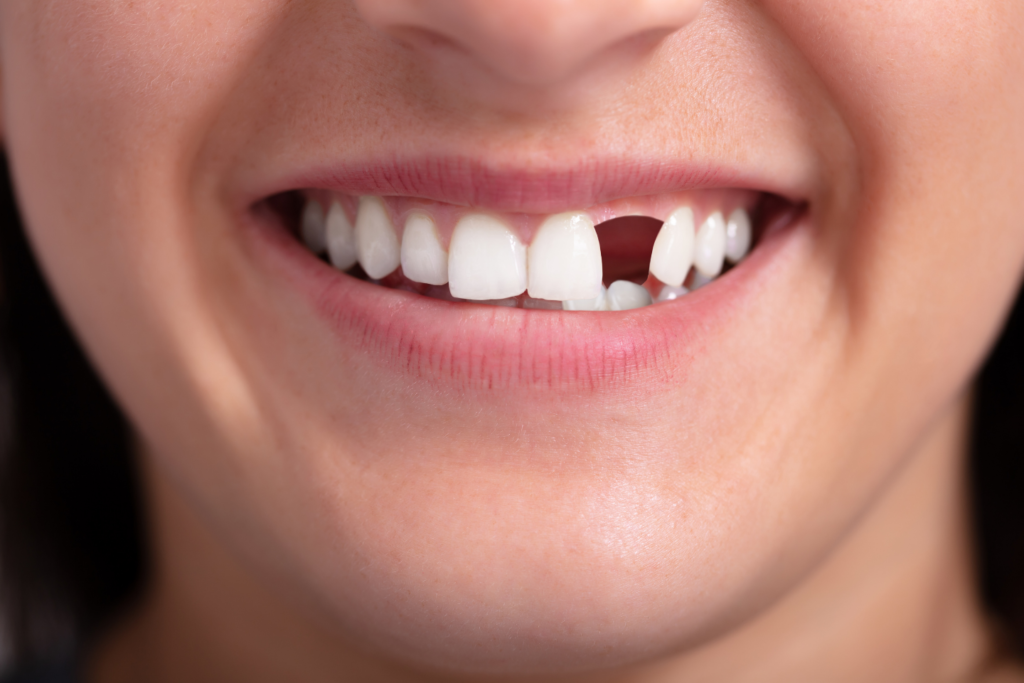
An extracted tooth doesn’t have to stay a gap. Depending on which tooth it was, how many you’re missing, and your bone health, there are a few routes.
Dental implants replace the tooth root as well as the crown, and are the closest thing to a natural tooth in look and function. Our All-on-4 page covers the fixed, full-arch version if you’re missing several teeth.
Bridges fill a gap using the neighbouring teeth as anchors, and are a well-established option when an implant isn’t suitable or preferred. See our crowns and bridges page for how this works.
Dentures are the removable option, and can replace anything from a single tooth to a full arch. Our dentures page covers the types and what’s involved.
If bone loss is a factor in whichever option you’re considering, our bone grafts page explains when that’s needed and what it involves.
You’re not obligated to replace an extracted tooth immediately, or at all, depending on which tooth it is and how it affects your bite. We’ll talk through whether replacement is worth pursuing in your specific case.
Standard extractions at Aqua Dental Clinic start from £125. Wisdom tooth extractions, which are usually surgical, start from £450, reflecting the extra time and complexity involved.
The exact cost depends on whether it’s a simple or surgical extraction, how many teeth are involved, and your individual case. Our payment plans and membership plans may also apply. Full current pricing is listed on our dental fees page.
Extractions are quick procedures, but they’re not casual ones. We take the same care over a single extraction as we do over any other treatment: a proper assessment, a clear explanation of why removal is the right call (and confirmation that it is, rather than an alternative), and a plan for what happens to the gap afterwards if you want one.
You can see the technology behind how we assess extractions on our technology page, and get a feel for who you’ll be seeing on our meet the team page.
If dental anxiety is part of what’s kept you from dealing with a problem tooth, our nervous patients page explains how we handle that, without the usual empty reassurances. New to the practice? Our new patients page walks through what your first visit actually looks like.

Book a consultation with Aqua Dental Clinic and find out whether it can be saved, or what extraction and replacement would involve. And if you’re a few days past an extraction and something doesn’t feel right, get in touch, it’s better to check than wait it out.
The extraction itself shouldn’t hurt, since the area is fully numbed with local anaesthetic beforehand. You’ll feel pressure and movement, not sharp pain. Some soreness afterwards, once the anaesthetic wears off, is normal.
A simple extraction often takes just a few minutes. Surgical extractions, including most wisdom teeth, can take 20 to 40 minutes depending on the tooth’s position and root shape.
If you only had local anaesthetic, yes, you can drive yourself. If you had sedation, you’ll need someone to drive you and stay with you for a few hours afterwards.
Stick to soft, cool foods for the first day or two, avoiding the extraction site. Most people can return to a fairly normal diet within a week, once the socket has settled.
Dry socket typically shows up as worsening pain two to four days after extraction, rather than gradual improvement, sometimes with a bad taste or visible bone in the socket. Call us if this happens rather than waiting it out.
No. A wisdom tooth that’s fully emerged, correctly positioned, and easy to clean around can often be left in place. Removal is recommended when there’s a specific problem, based on your X-ray and symptoms.
Not automatically. A root canal saves the natural tooth and is usually preferable when it’s viable. Extraction is considered when the tooth is too damaged or infected for root canal treatment to succeed.
We can talk through sedation options for patients who are particularly anxious or for more complex surgical extractions. This is discussed and arranged in advance of your appointment.
NHS extractions are available where clinically necessary. We can talk through both NHS and private routes at a consultation, along with the difference in appointment availability and options.