



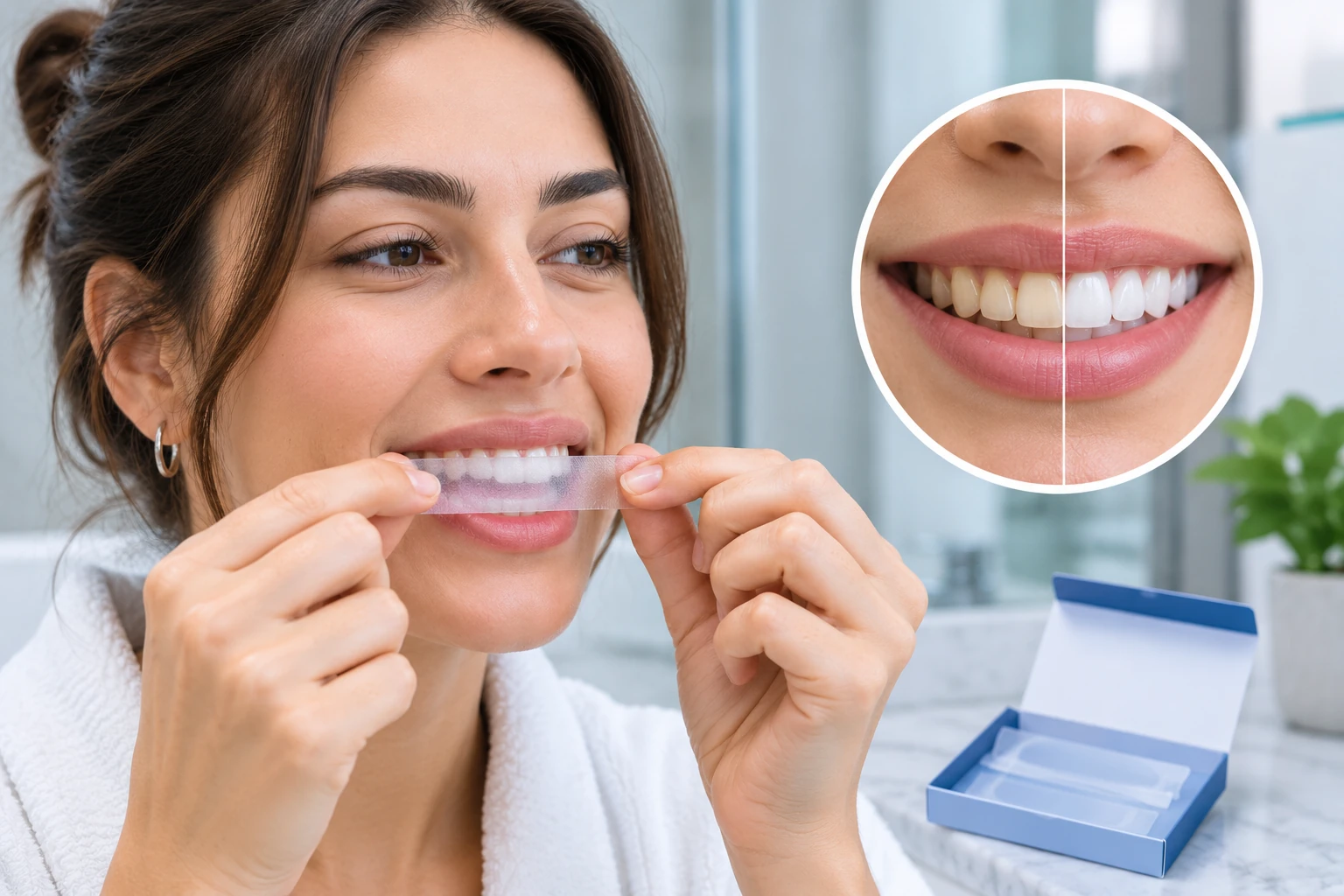
Whitening strips are a popular way to lighten teeth at home, and they are easy to find in shops and online. They can give a modest improvement for some people, but they have limits, and it is worth understanding how they work and how often to use them before you start.
How whitening strips work
Strips are coated with a peroxide-based gel. When pressed onto the front surfaces of your teeth, the gel lifts stains in the enamel and lightens the shade. Results depend on the strength of the product, how closely you follow the instructions and the cause of your discolouration.
What UK rules say about home whitening
In the UK, the strength of whitening products sold directly to the public is regulated. Stronger products may only be used by a dentist, which is one of the reasons professional whitening can deliver more noticeable results. If a product online claims to be much stronger than shop-bought kits, treat it with caution, as untested or unregulated products can damage the gums and teeth.
How often can you use whitening strips?
Always follow the instructions on the packet. These usually set out how long to wear each strip, how many days to use them in a row and how long to leave between courses. Using strips more often or for longer than directed will not give better results and can increase sensitivity and gum irritation.
Limits of whitening strips
- They cover only the front surfaces of the teeth, so results can look uneven
- They do not change the colour of fillings, crowns or veneers
- They are less effective on deep staining or certain discolouration
- They are not suitable for everyone, including those with untreated decay or gum problems
- Results are temporary and fade over time
If you are not sure why your teeth look yellow, it helps to understand why teeth become yellow even with good oral hygiene.
Possible side effects
- Tooth sensitivity, particularly to hot and cold
- Gum irritation if the strip touches the gums
- Patchy or uneven colour
- Temporary white patches on the teeth
Stop using the strips and speak to your dentist if you experience pain, or if sensitivity does not settle.
When to consider professional whitening
A dentist can check your teeth and gums first, tailor the treatment and protect your gums while it is carried out. To see what to expect from results, read how long professional teeth whitening lasts, or find out more about teeth whitening at Aqua Dental Clinic. If you would like advice, contact us.
Frequently Asked Questions
Do whitening strips damage enamel?
Used as directed on a regulated product, they are not expected to damage enamel, but they can cause sensitivity and gum irritation if overused.
Can I use whitening strips if I have fillings or crowns?
You can, but the strips will not lighten them, so your natural teeth may end up a different shade to your restorations.
How long do whitening strip results last?
Results fade gradually, and how long they last depends on your diet, habits such as smoking and your oral hygiene.
Should I see my dentist before whitening?
It is a good idea. A check-up makes sure your teeth and gums are healthy enough for whitening.